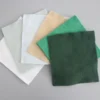
Staple Fiber Nonwoven Geotextile

Needle-punched PET or PP staple-fiber nonwoven geotextile with high elongation, filtration and cushioning performance for separation, drainage and geomembrane protection.

Product overview

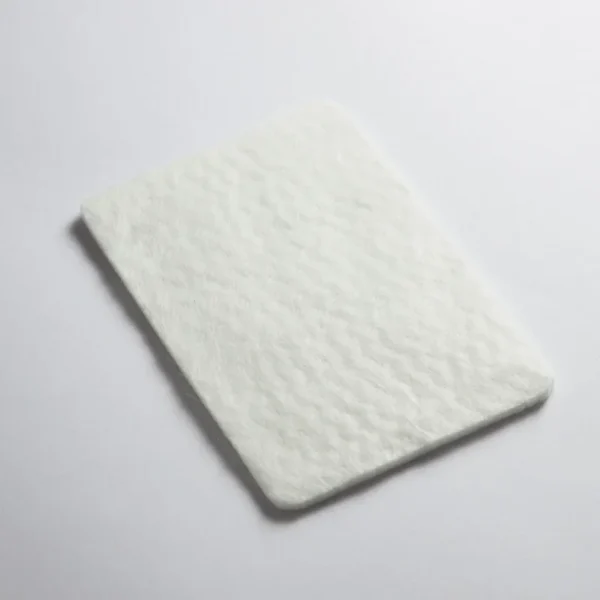
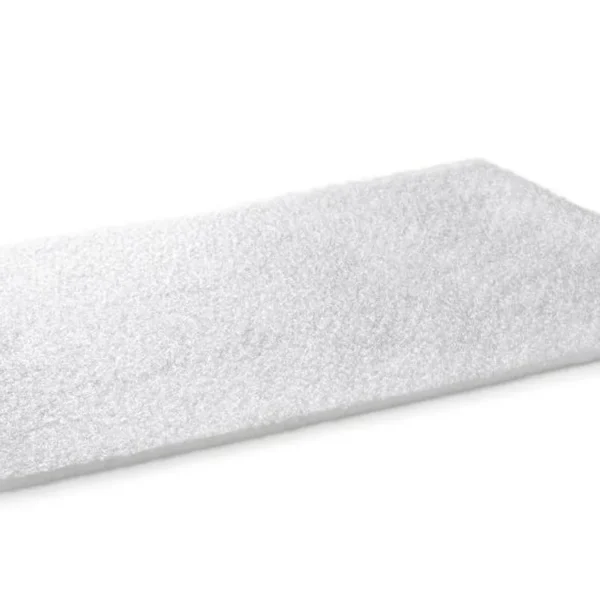
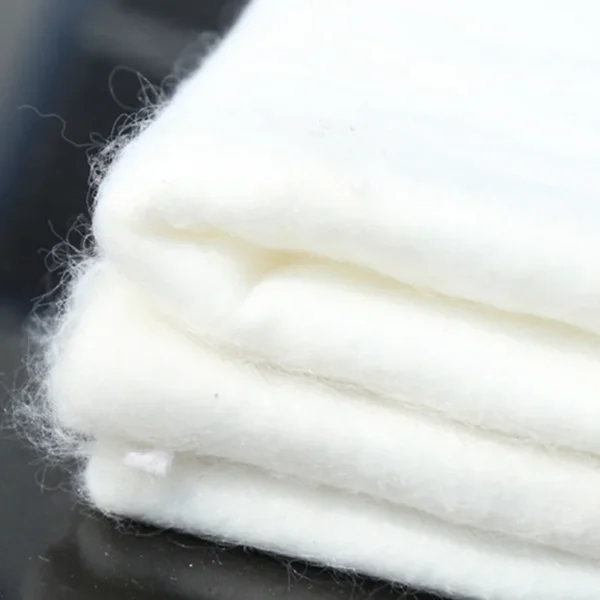
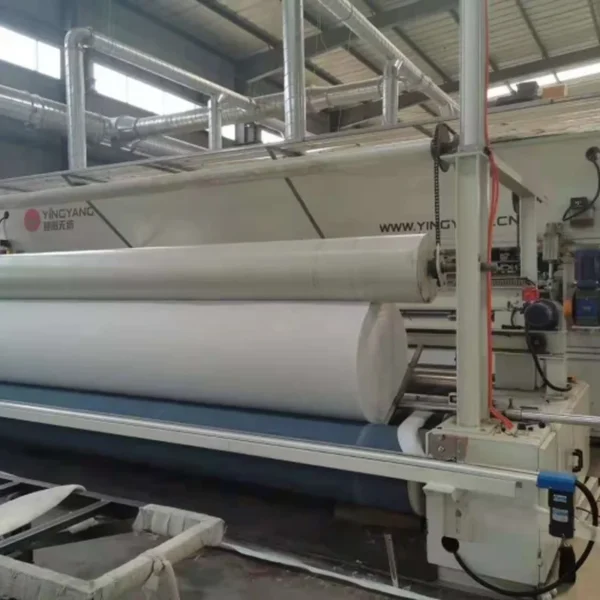
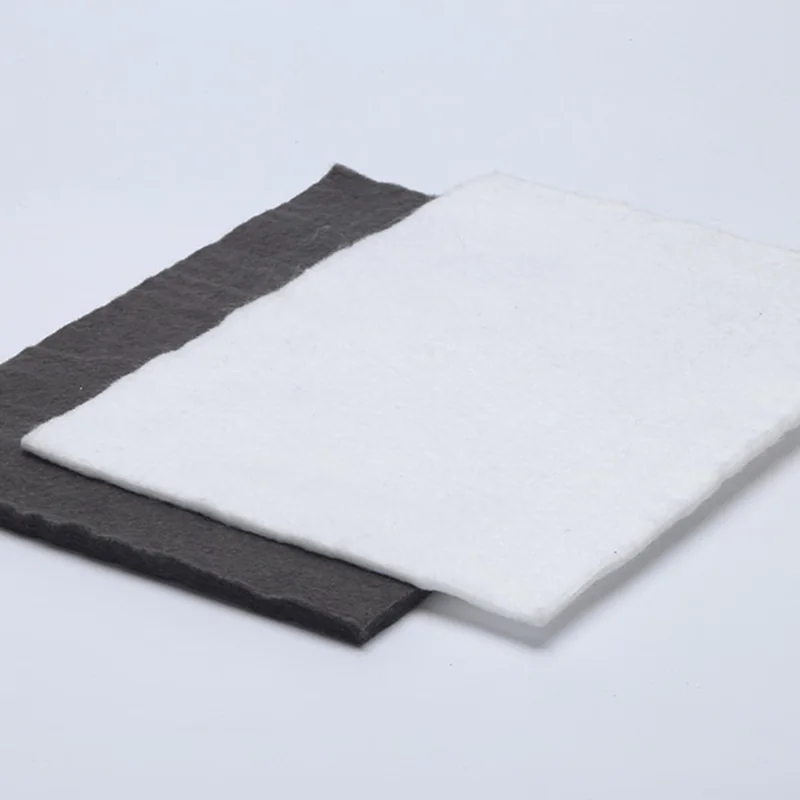
Staple fiber nonwoven geotextile is made from polyester (PET) or polypropylene (PP) staple fibers through opening, carding, cross-lapping and multi-pass needle punching. Fibers typically 38–76 mm long are mechanically interlocked into a bulky, porous and nearly isotropic structure with strong filtration, drainage and deformation adaptability.

Key features

  • Bulky construction and high porosity for effective permeability and in-plane drainage
  • Balanced opening size for long-term filtration and soil retention
  • High elongation that accommodates uneven settlement without brittle failure
  • Rough, isotropic fiber structure with strong soil-interface friction
  • Good puncture and burst resistance for cushioning geomembranes
  • Economical, mature production for large-volume civil-engineering use

Aplicaciones

  • Road, railway and airfield separation and filtration
  • Soft-ground improvement and temporary access roads
  • Levees, riverbanks, reservoirs and irrigation canals
  • Landfills, tailings ponds and wastewater facilities
  • Tunnels, basements, green roofs and underground drainage
  • Mine reclamation and ecological slope restoration

Specification and supply

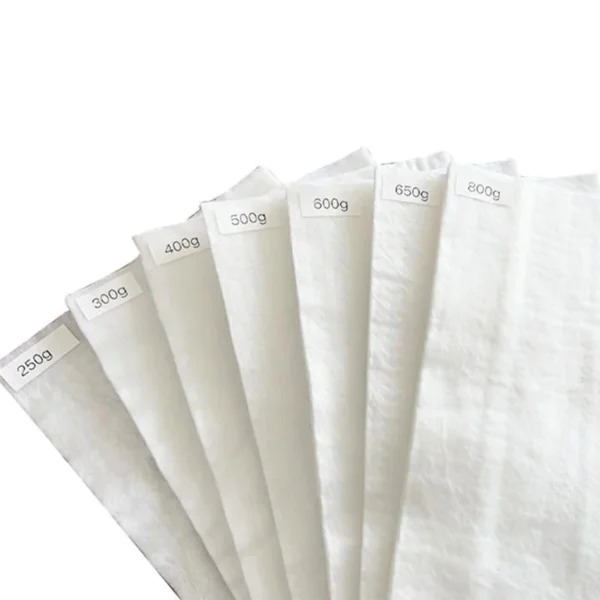
Use 100–150 g/m² for curing and light separation, 200–300 g/m² for road subgrades and drainage filtration, 300–400 g/m² for railways, soft ground and levees, and 400–600 g/m² or heavier for landfills, tailings facilities and demanding protection. The project design remains the controlling requirement.

Available options

  • Mass per unit area: 100–800 g/m²
  • Material: PET or PP staple fiber
  • Typical fiber length: 38–76 mm
  • Roll width and length: project-specific options available
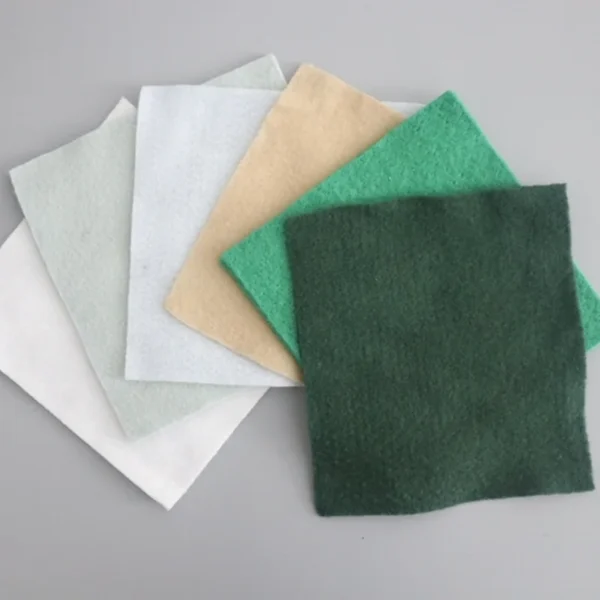
  • Color and packaging: available to order

Frequently asked questions

What is a staple-fiber geotextile?

It is a needle-punched nonwoven geosynthetic made from PET or PP staple fibers, generally 38–76 mm long, through opening, carding, web laying and mechanical consolidation.

How does it differ from filament geotextile?

Staple-fiber fabric is bulkier, has high elongation and strong deformation adaptability, and is economical for filtration and protection. Continuous-filament fabric generally provides higher tensile strength and modulus at the same mass.

What are typical technical values for a 400 g/m² grade?

Typical supplied values are tensile strength ≥ 12.5 kN/m, CBR puncture strength ≥ 2.0 kN, trapezoid tear strength ≥ 0.33 kN and thickness ≥ 3.0 mm. Final acceptance follows the mill certificate and project test method.

What functions does staple-fiber geotextile provide?

It provides separation, filtration, drainage, reinforcement and protection, and can cushion geomembranes against puncture and stress concentration.

Which projects commonly use it?

Common uses include road and railway subgrades, airfields, levees, canals, landfills, tailings ponds, artificial lakes, basement protection and landscaping.

How should the mass grade be selected?

Use lighter grades for general separation, medium grades for road filtration and drainage, and heavier grades for soft ground, landfills, tailings facilities and geomembrane protection. Always follow the design documents.

How are filtration criteria checked?

Retention, permeability and clogging resistance should be checked against the protected soil gradation. Site-specific testing is recommended for gap-graded or piping-prone soils.

How is it used with geomembranes?

It is installed above or below HDPE or LLDPE geomembranes to reduce puncture and localized stress. Heavier grades are normally selected where cover aggregate or high contact pressure is expected.

What are the key installation requirements?

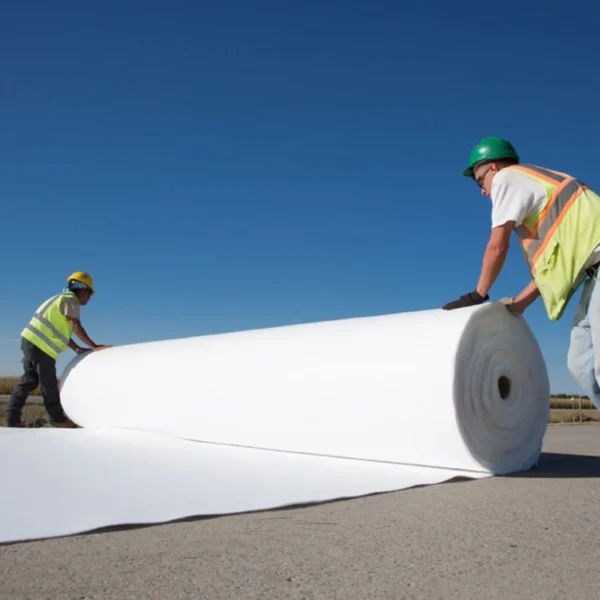
Level the subgrade, remove sharp objects, lay the fabric without tension with suitable slack, overlap or sew joints as specified, cover promptly and keep machinery off the fabric until a protective layer is placed.

How are joints and damaged areas handled?

Ordinary areas can be overlapped; demanding work may require sewn seams. Repair damage with matching material extending at least 30 cm beyond the affected edge, unless the project specification requires more.

Technical specifications

Mass per unit area

Unit: g/m² • 100: 100 • 150: 150 • 200: 200 • 250: 250 • 300: 300 • 350: 350 • 400: 400 • 450: 450 • 500: 500 • 600: 600 • 800: 800 • Test method: GB/T 13762 · ISO 9864 · ASTM D5261

Mass tolerance

Unit: % • 100: ±5 • 150: ±5 • 200: ±5 • 250: ±5 • 300: ±5 • 350: ±5 • 400: ±5 • 450: ±5 • 500: ±5 • 600: ±5 • 800: ±5 • Test method: GB/T 17638

Tensile strength MD/CD ≥

Unit: kN/m • 100: 2.5 • 150: 4.5 • 200: 6.5 • 250: 8.0 • 300: 9.5 • 350: 11.0 • 400: 12.5 • 450: 14.0 • 500: 16.0 • 600: 19.0 • 800: 25.0 • Test method: GB/T 15788 · ISO 10319 · ASTM D4595

Elongation at break

Unit: % • 100: 25–100 • 150: 25–100 • 200: 25–100 • 250: 25–100 • 300: 25–100 • 350: 25–100 • 400: 25–100 • 450: 25–100 • 500: 25–100 • 600: 25–100 • 800: 25–100 • Test method: GB/T 15788 · ISO 10319

CBR puncture strength ≥

Unit: kN • 100: 0.4 • 150: 0.7 • 200: 1.0 • 250: 1.2 • 300: 1.5 • 350: 1.7 • 400: 2.0 • 450: 2.2 • 500: 2.5 • 600: 3.0 • 800: 4.0 • Test method: GB/T 14800 · EN ISO 12236 · ASTM D6241

Trapezoid tear strength ≥

Unit: kN • 100: 0.08 • 150: 0.12 • 200: 0.16 • 250: 0.20 • 300: 0.24 • 350: 0.28 • 400: 0.33 • 450: 0.38 • 500: 0.42 • 600: 0.46 • 800: 0.60 • Test method: GB/T 13763 · ASTM D4533

Thickness at 2 kPa ≥

Unit: mm • 100: 0.9 • 150: 1.3 • 200: 1.7 • 250: 2.1 • 300: 2.4 • 350: 2.7 • 400: 3.0 • 450: 3.3 • 500: 3.6 • 600: 4.1 • 800: 5.0 • Test method: GB/T 13761.1 · ISO 9863-1

Characteristic opening size O₉₀

Unit: mm • 100: 0.07–0.20 • 150: 0.07–0.20 • 200: 0.07–0.20 • 250: 0.07–0.20 • 300: 0.07–0.20 • 350: 0.07–0.20 • 400: 0.07–0.20 • 450: 0.07–0.20 • 500: 0.07–0.20 • 600: 0.07–0.20 • 800: 0.07–0.20 • Test method: GB/T 14799 · EN ISO 12956

Permeability normal to plane

Unit: cm/s • 100: K × 10⁻¹ to 10⁻³ • 150: K × 10⁻¹ to 10⁻³ • 200: K × 10⁻¹ to 10⁻³ • 250: K × 10⁻¹ to 10⁻³ • 300: K × 10⁻¹ to 10⁻³ • 350: K × 10⁻¹ to 10⁻³ • 400: K × 10⁻¹ to 10⁻³ • 450: K × 10⁻¹ to 10⁻³ • 500: K × 10⁻¹ to 10⁻³ • 600: K × 10⁻¹ to 10⁻³ • 800: K × 10⁻¹ to 10⁻³ • Test method: GB/T 15789 · EN ISO 11058

Width tolerance

Unit: % • 100: −0.5 • 150: −0.5 • 200: −0.5 • 250: −0.5 • 300: −0.5 • 350: −0.5 • 400: −0.5 • 450: −0.5 • 500: −0.5 • 600: −0.5 • 800: −0.5 • Test method: GB/T 17638

UV resistance (500 h) retention ≥

Unit: % • 100: 85 • 150: 85 • 200: 85 • 250: 85 • 300: 85 • 350: 85 • 400: 85 • 450: 85 • 500: 85 • 600: 85 • 800: 85 • Test method: GB/T 17631 · EN 12224 · ASTM D4355

Oxidation resistance (PP type) ≥

Unit: % • 100: 90 • 150: 90 • 200: 90 • 250: 90 • 300: 90 • 350: 90 • 400: 90 • 450: 90 • 500: 90 • 600: 90 • 800: 90 • Test method: GB/T 17630 · EN ISO 13438 · ASTM D5721