استفسار المشروع
أخبرنا عن مشروعك
شارك نوع المنتج والتطبيق والأبعاد والكمية ووجهة التسليم. سوف يستجيب فريقنا بإرشادات عملية للمنتج والتوريد.

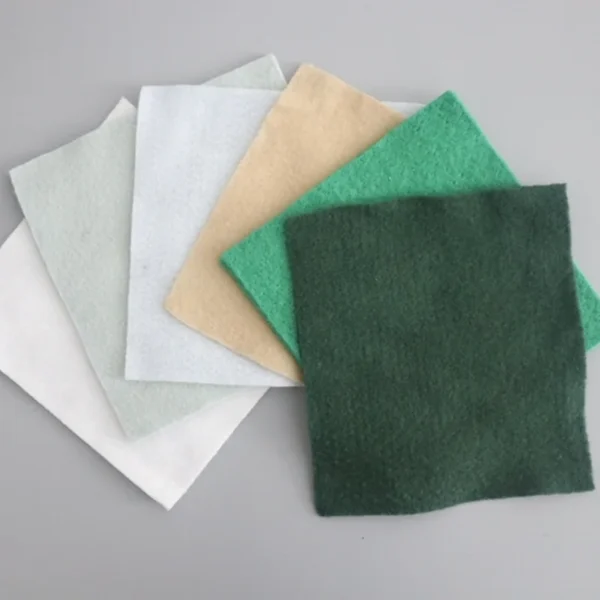
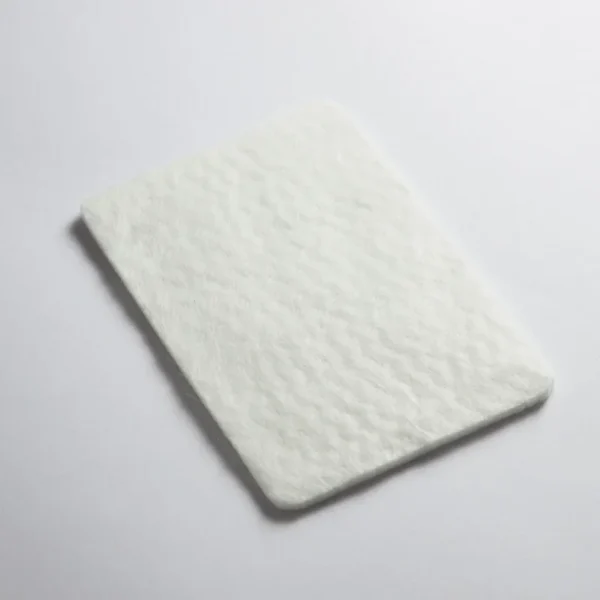
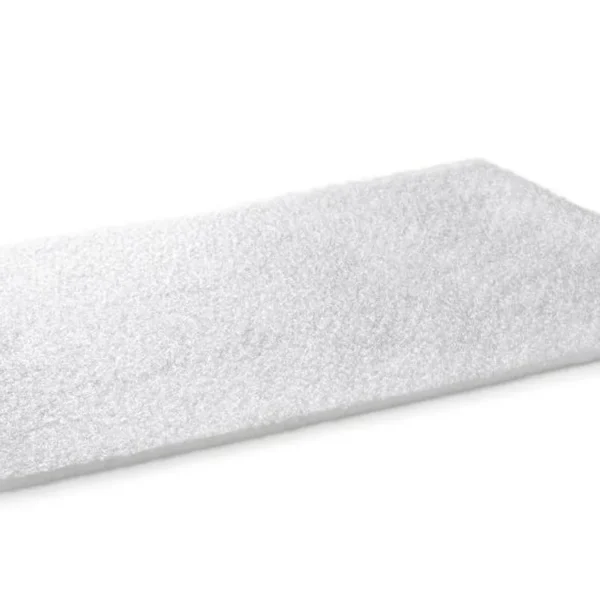
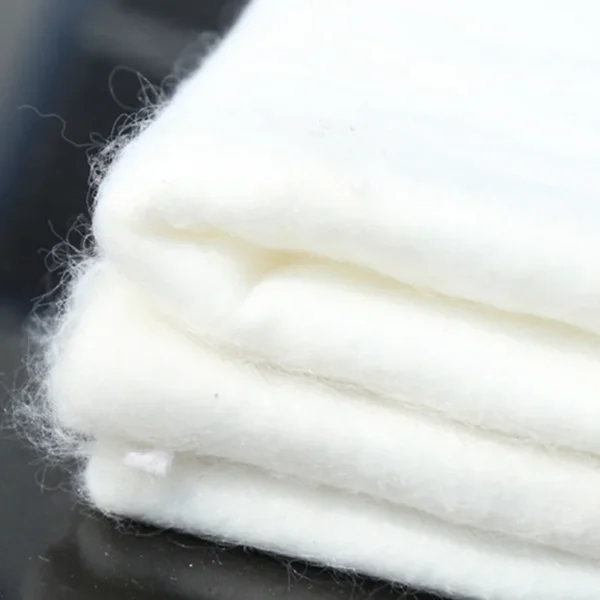
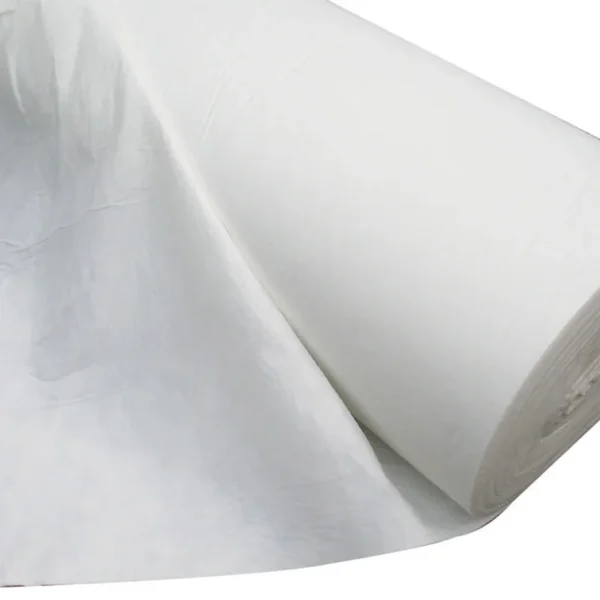
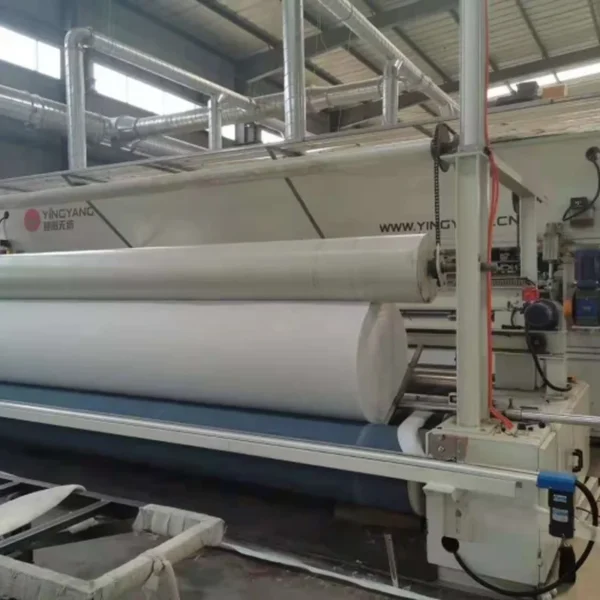

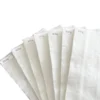
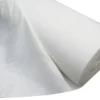
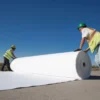
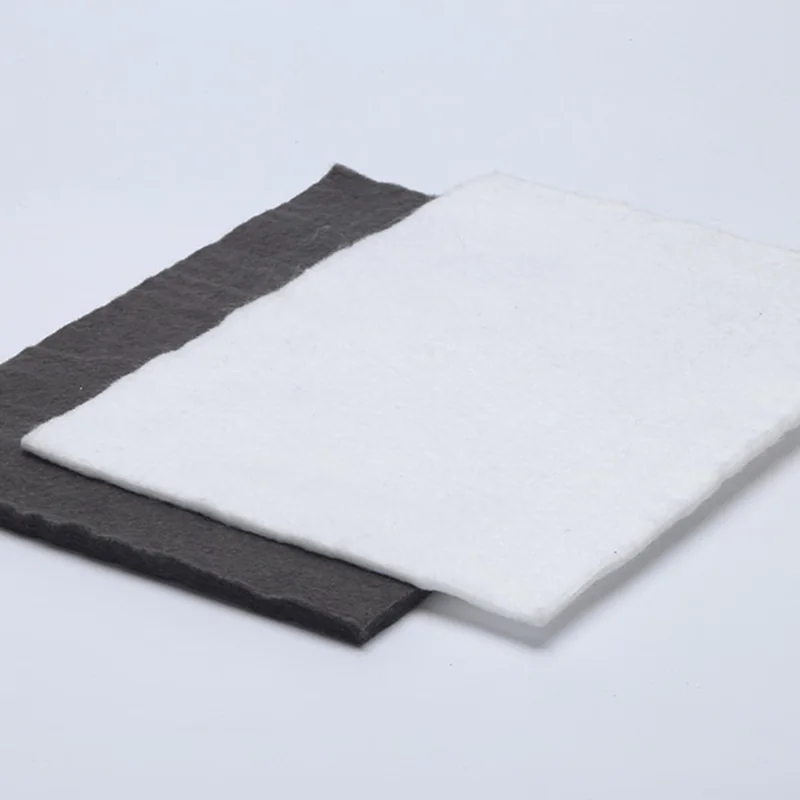
Needle-punched PET or PP staple-fiber nonwoven geotextile with high elongation, filtration and cushioning performance for separation, drainage and geomembrane protection.
Staple fiber nonwoven geotextile is made from polyester (PET) or polypropylene (PP) staple fibers through opening, carding, cross-lapping and multi-pass needle punching. Fibers typically 38–76 mm long are mechanically interlocked into a bulky, porous and nearly isotropic structure with strong filtration, drainage and deformation adaptability.
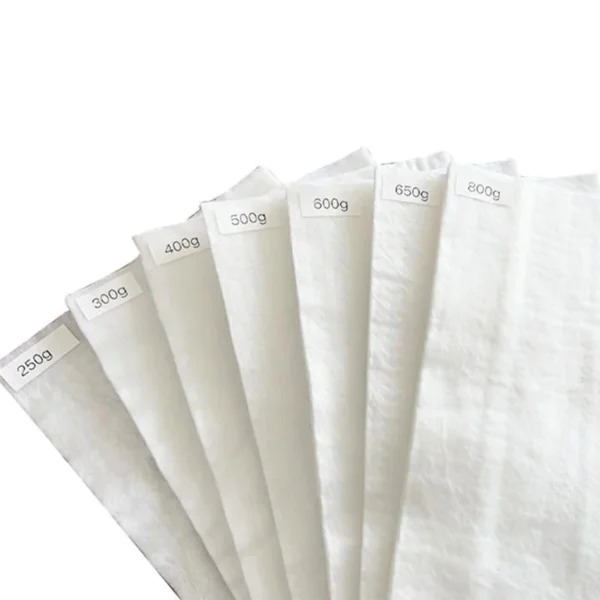
Use 100–150 g/m² for curing and light separation, 200–300 g/m² for road subgrades and drainage filtration, 300–400 g/m² for railways, soft ground and levees, and 400–600 g/m² or heavier for landfills, tailings facilities and demanding protection. The project design remains the controlling requirement.
It is a needle-punched nonwoven geosynthetic made from PET or PP staple fibers, generally 38–76 mm long, through opening, carding, web laying and mechanical consolidation.
Staple-fiber fabric is bulkier, has high elongation and strong deformation adaptability, and is economical for filtration and protection. Continuous-filament fabric generally provides higher tensile strength and modulus at the same mass.
Typical supplied values are tensile strength ≥ 12.5 kN/m, CBR puncture strength ≥ 2.0 kN, trapezoid tear strength ≥ 0.33 kN and thickness ≥ 3.0 mm. Final acceptance follows the mill certificate and project test method.
It provides separation, filtration, drainage, reinforcement and protection, and can cushion geomembranes against puncture and stress concentration.
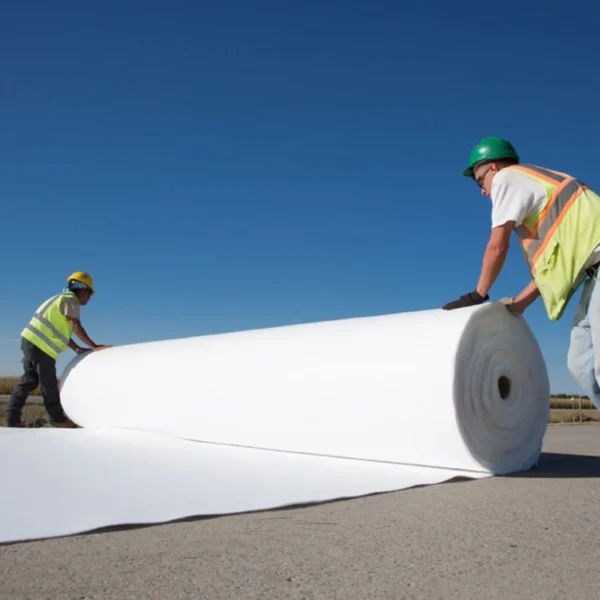
Common uses include road and railway subgrades, airfields, levees, canals, landfills, tailings ponds, artificial lakes, basement protection and landscaping.
Use lighter grades for general separation, medium grades for road filtration and drainage, and heavier grades for soft ground, landfills, tailings facilities and geomembrane protection. Always follow the design documents.
Retention, permeability and clogging resistance should be checked against the protected soil gradation. Site-specific testing is recommended for gap-graded or piping-prone soils.
It is installed above or below HDPE or LLDPE geomembranes to reduce puncture and localized stress. Heavier grades are normally selected where cover aggregate or high contact pressure is expected.
Level the subgrade, remove sharp objects, lay the fabric without tension with suitable slack, overlap or sew joints as specified, cover promptly and keep machinery off the fabric until a protective layer is placed.
Ordinary areas can be overlapped; demanding work may require sewn seams. Repair damage with matching material extending at least 30 cm beyond the affected edge, unless the project specification requires more.
|