استفسار المشروع
أخبرنا عن مشروعك
شارك نوع المنتج والتطبيق والأبعاد والكمية ووجهة التسليم. سوف يستجيب فريقنا بإرشادات عملية للمنتج والتوريد.

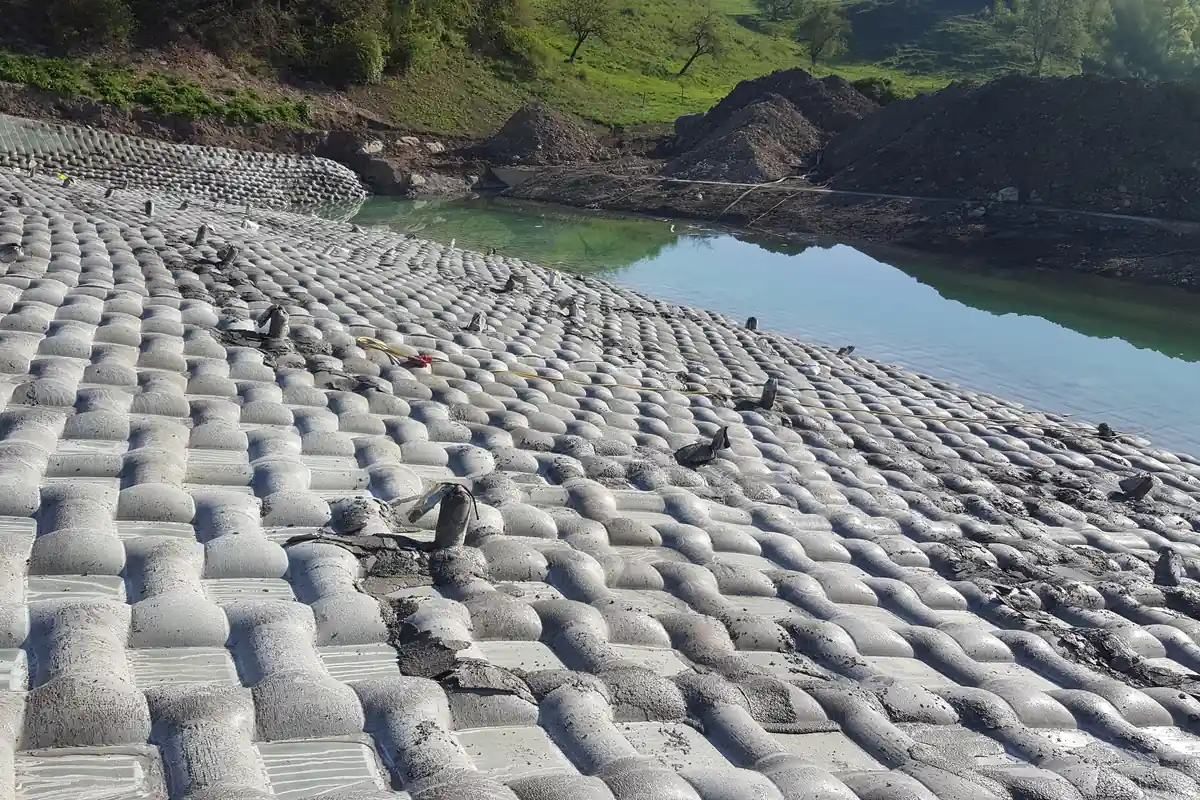
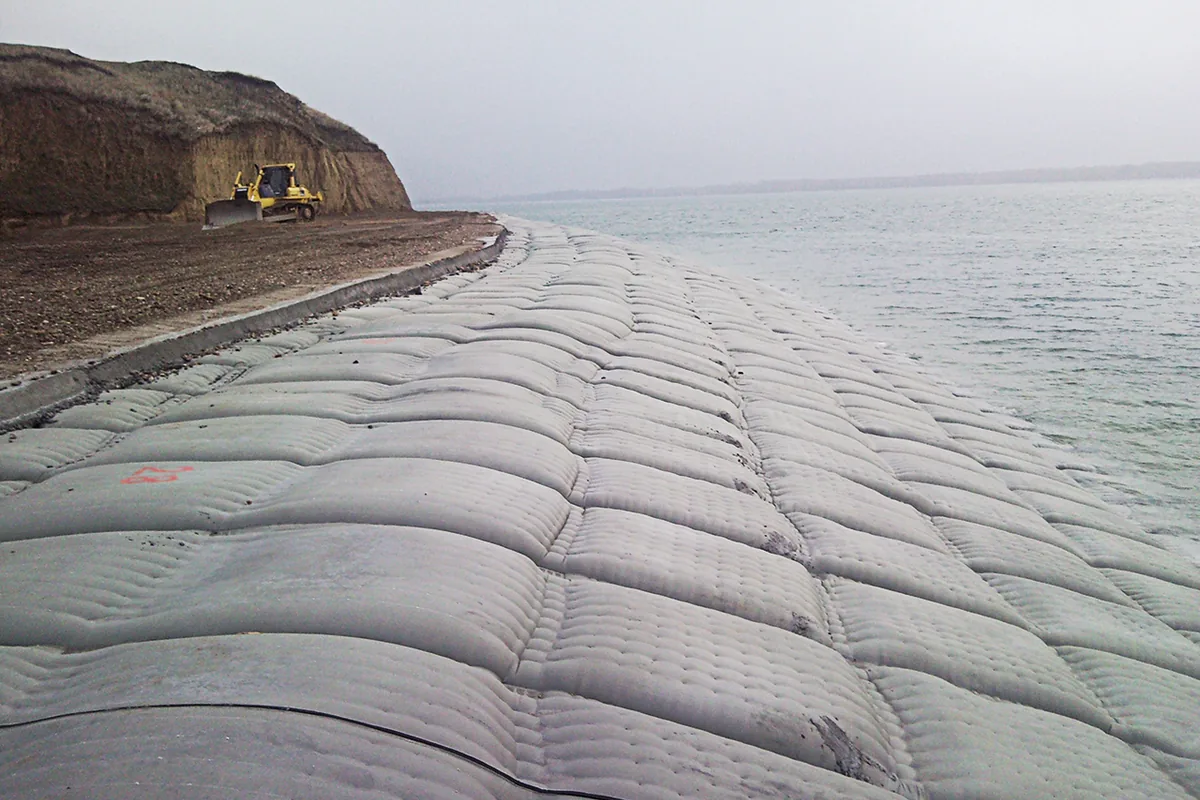
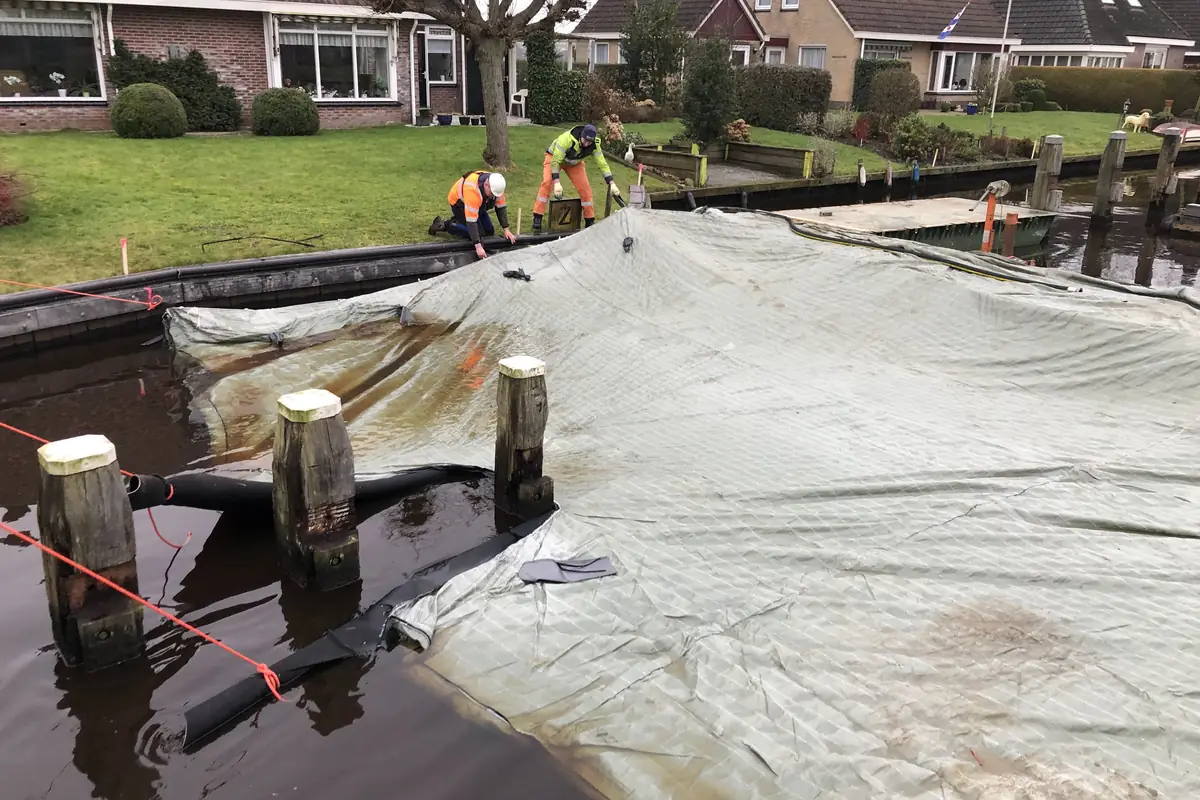
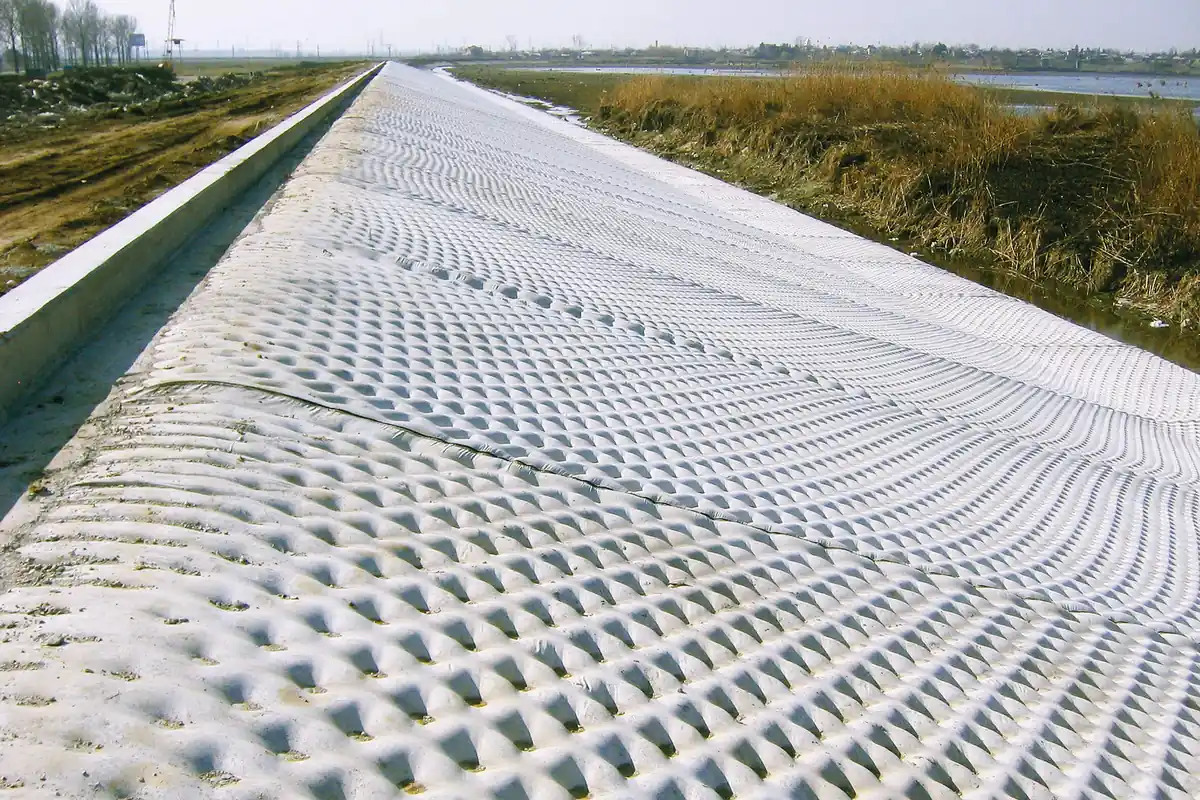
Geofabriform applications for river and channel slopes, coastal seawalls, reservoirs, lakes and dam protection.
Hydraulic Protection Applications
Fabric-formed concrete protection for rivers, channels, coastlines, reservoirs and dam slopes—including underwater and tidal-zone construction.
System Functions
A high-strength double-layer woven mattress serves as permanent flexible formwork. Pumped mortar or fine-aggregate concrete fills the anchored system while controlled drainage helps create a dense, continuous protective surface.
Works on submerged and tidal foundations without conventional formwork or dewatering.
A continuous concrete surface resists waves, flow, abrasion and local undercutting.
The flexible mattress conforms to curved banks, steep slopes and irregular ground.
Stabilized fabric protects dense cured concrete in demanding hydraulic exposure.
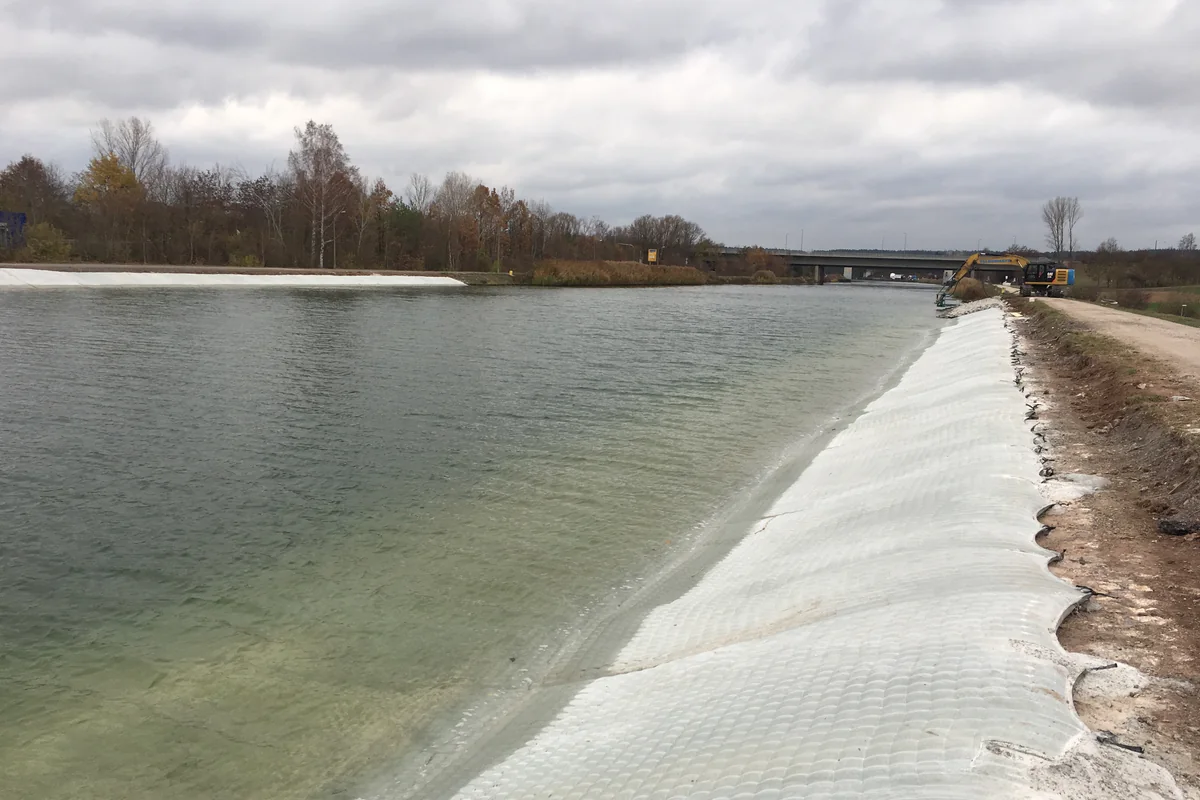
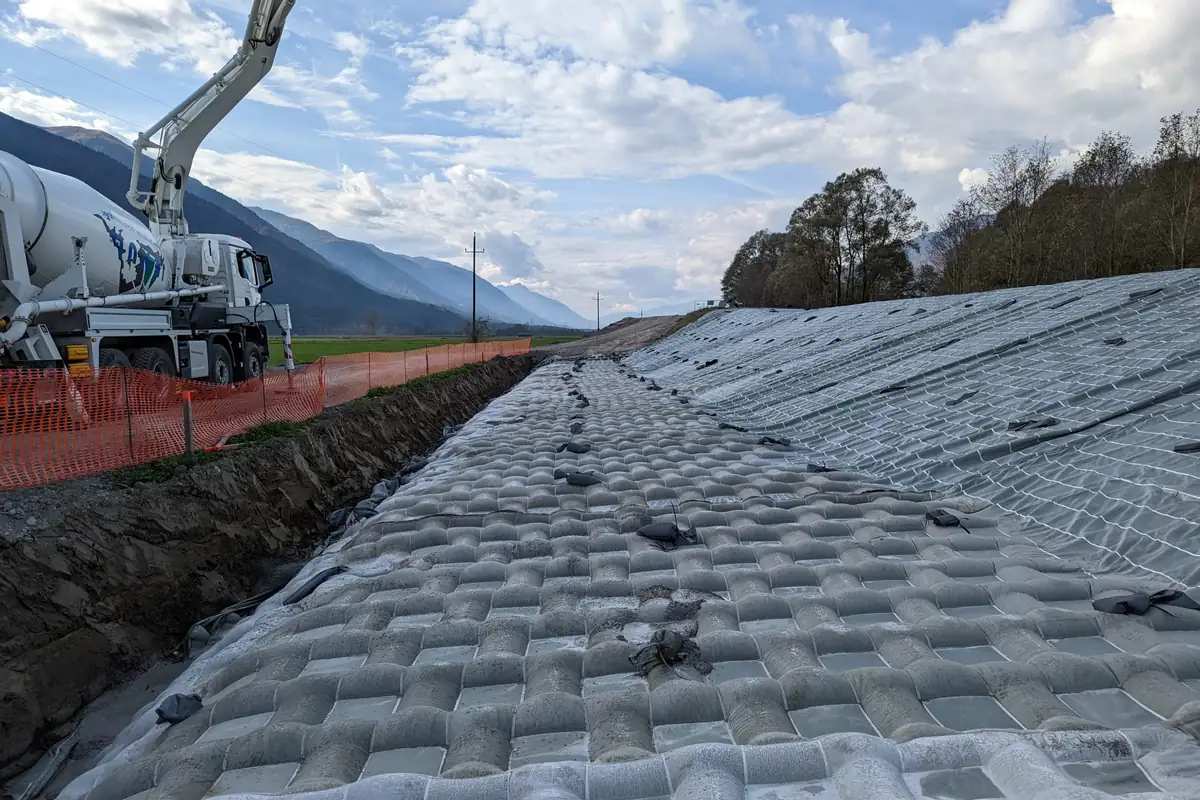
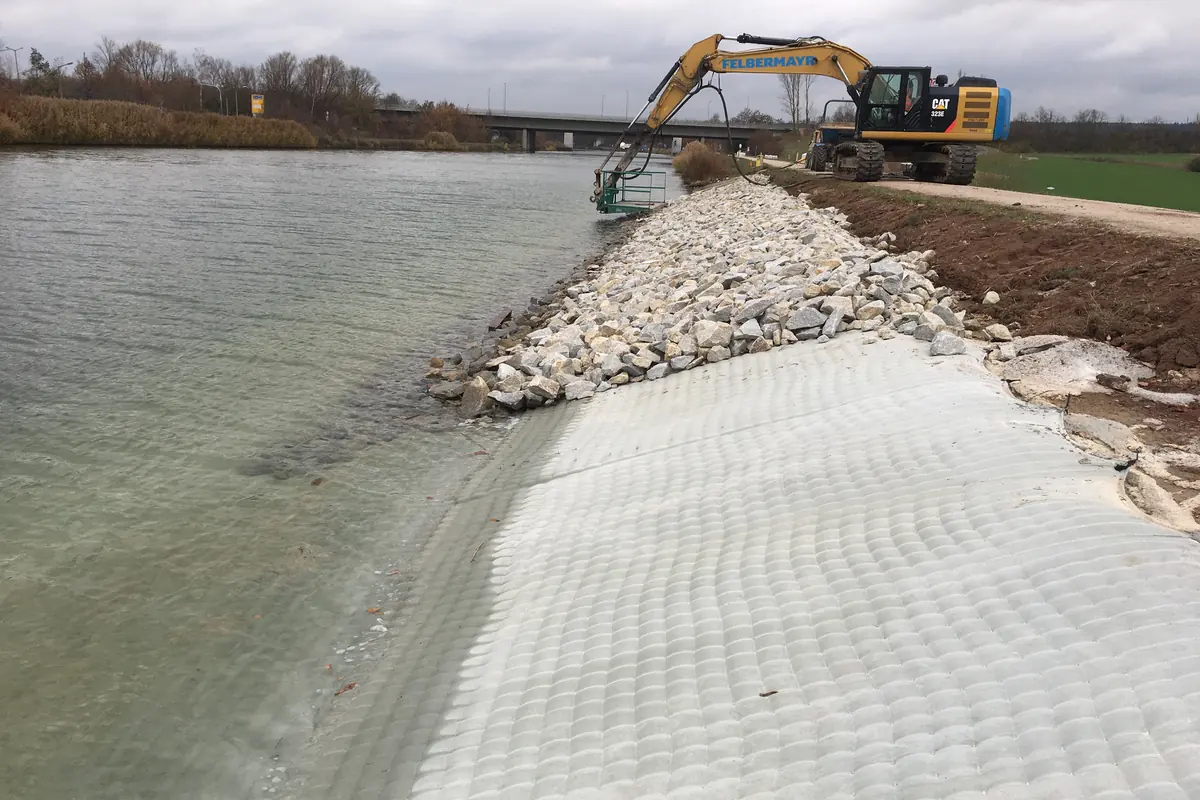
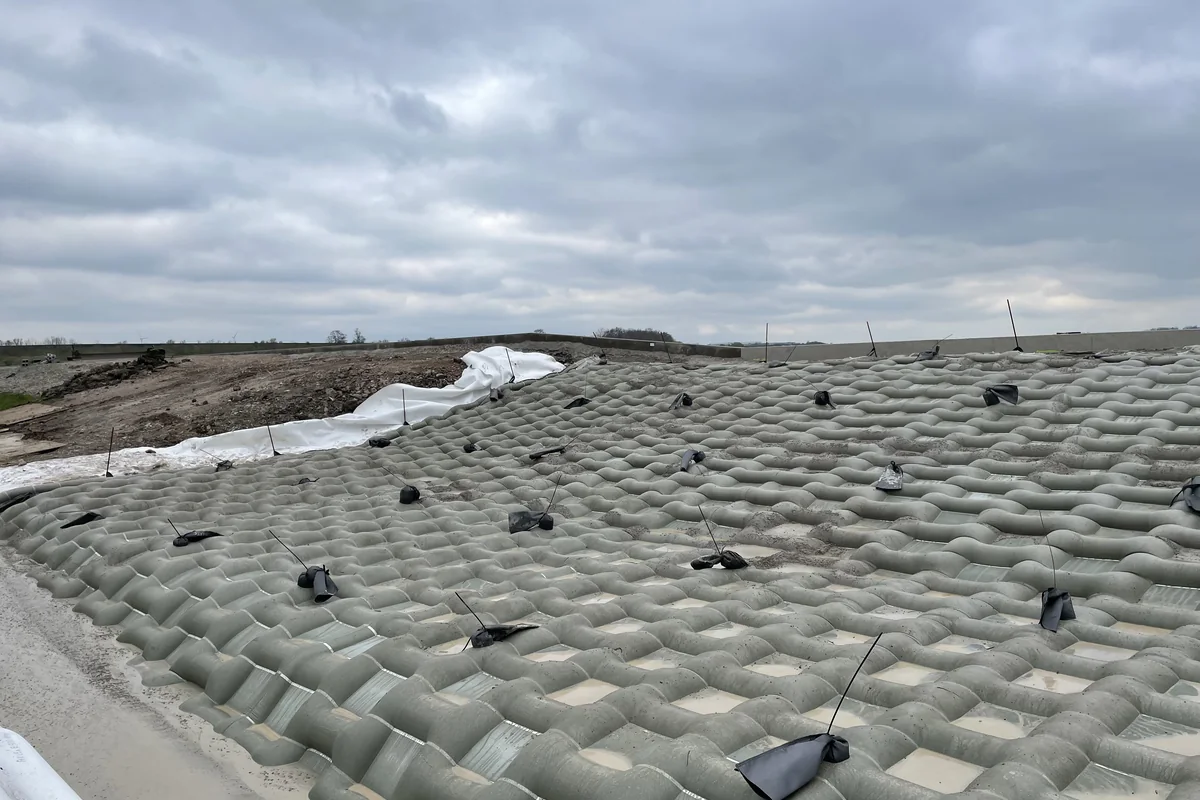
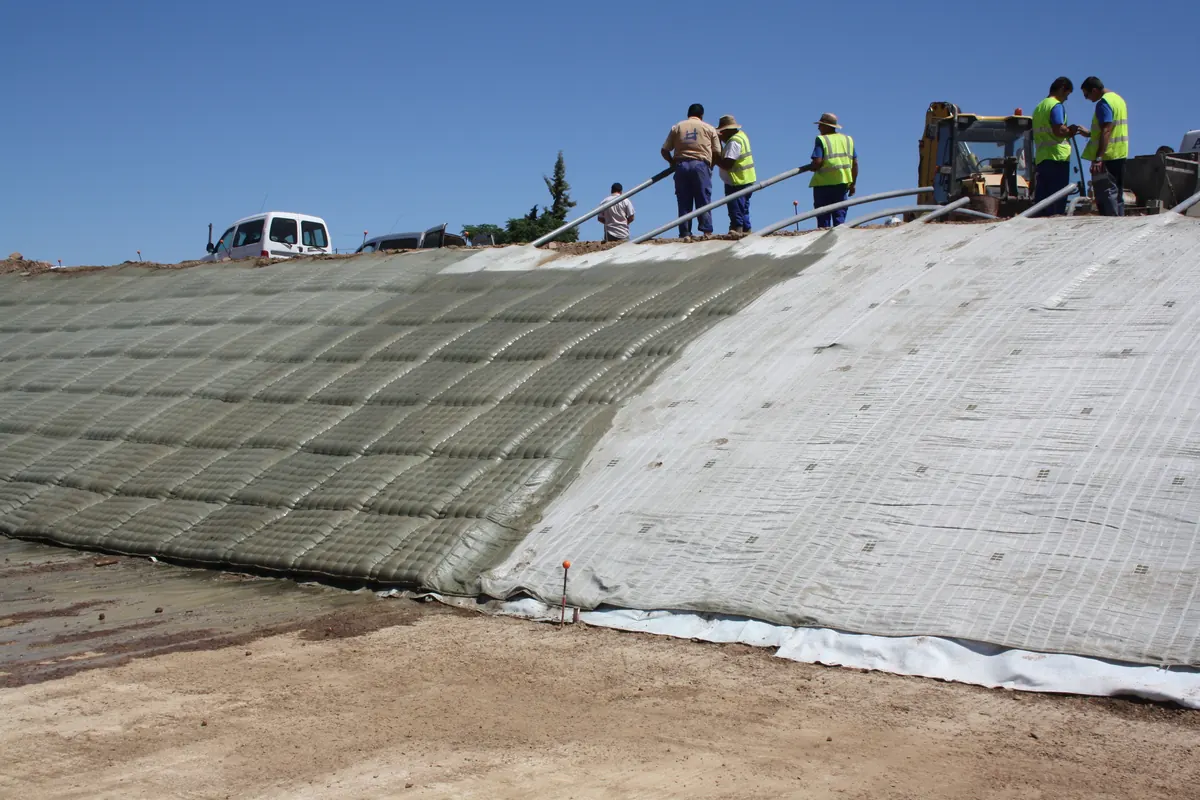
01 / Rivers & Channels
Geofabriform creates a dense, seamless concrete revetment for rivers, irrigation canals and drainage channels. It can be installed in flowing or submerged conditions without cofferdams or flow interruption, while the continuous surface resists flood flow, sediment abrasion and bank undercutting.
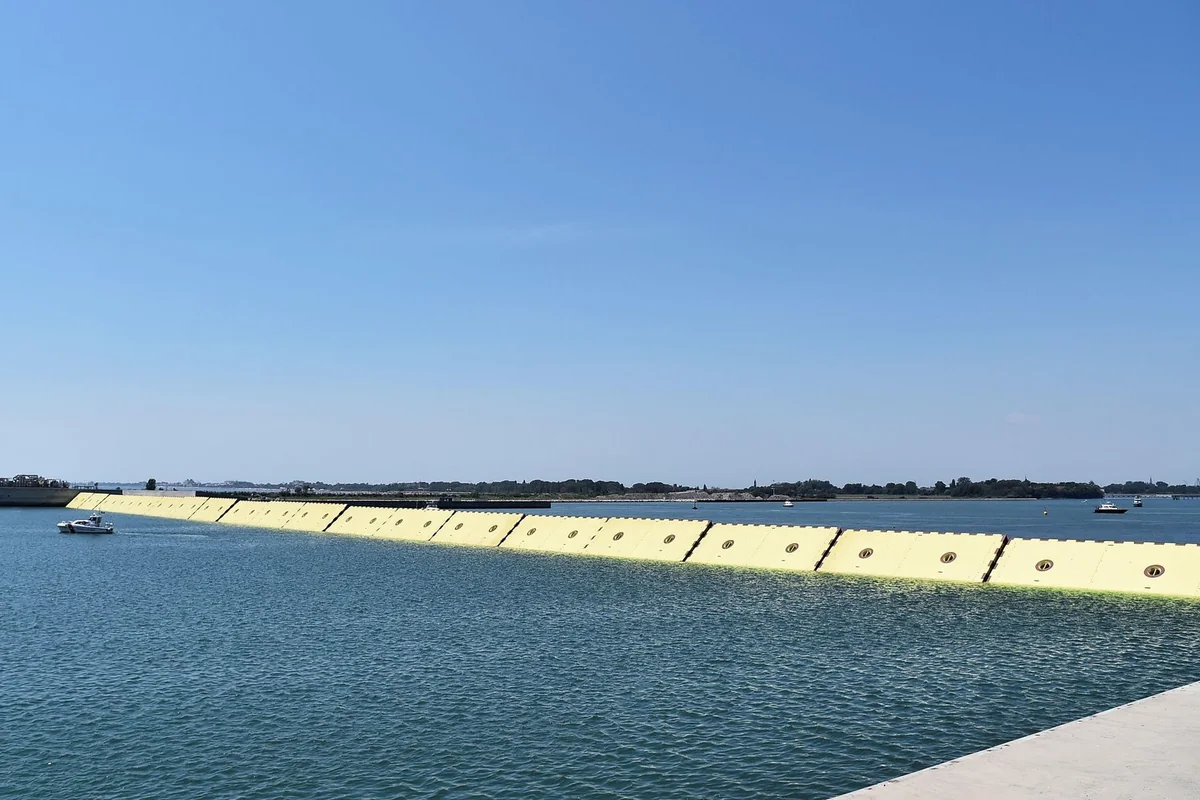
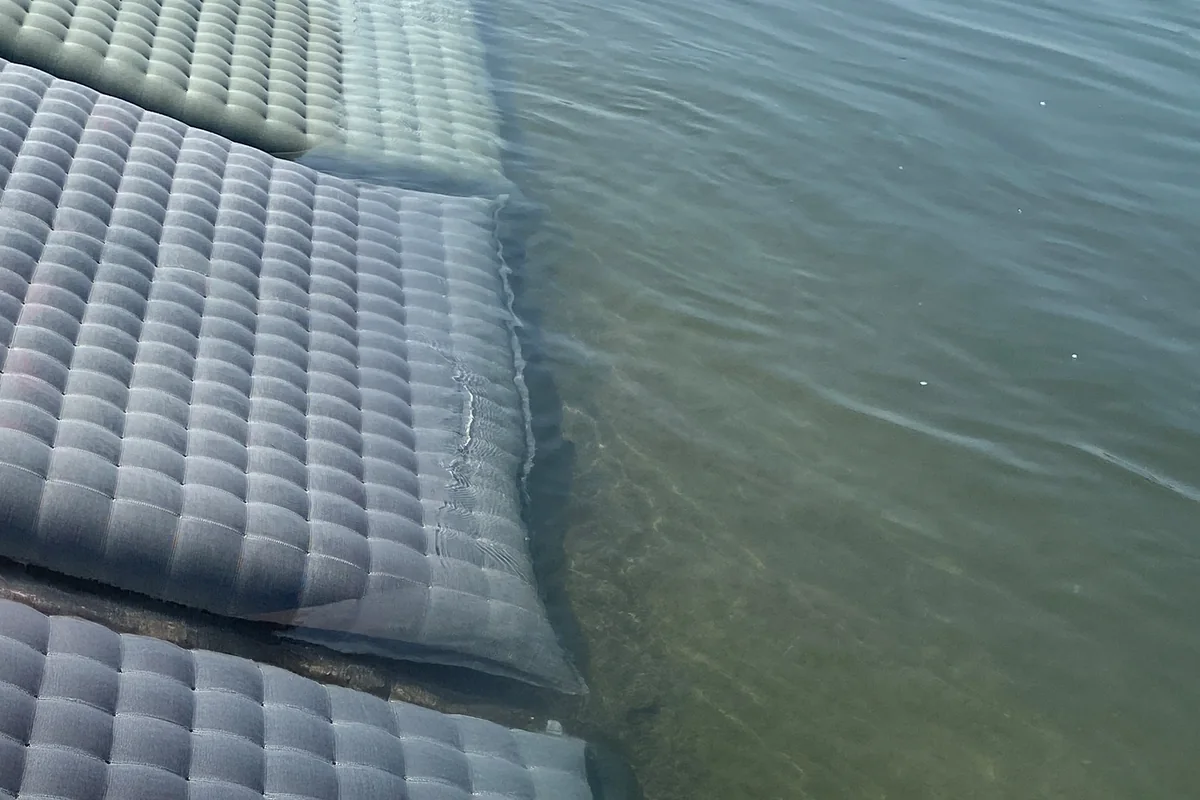
02 / Coastal Protection
On wave-facing seawalls, intertidal zones and submerged coastal slopes, Geofabriform forms a monolithic revetment that follows uneven ground and resists wave impact, cyclic tidal scour and storm-surge erosion. Salt-resistant, UV-stabilized fabric and reinforced anchoring are specified for marine exposure.
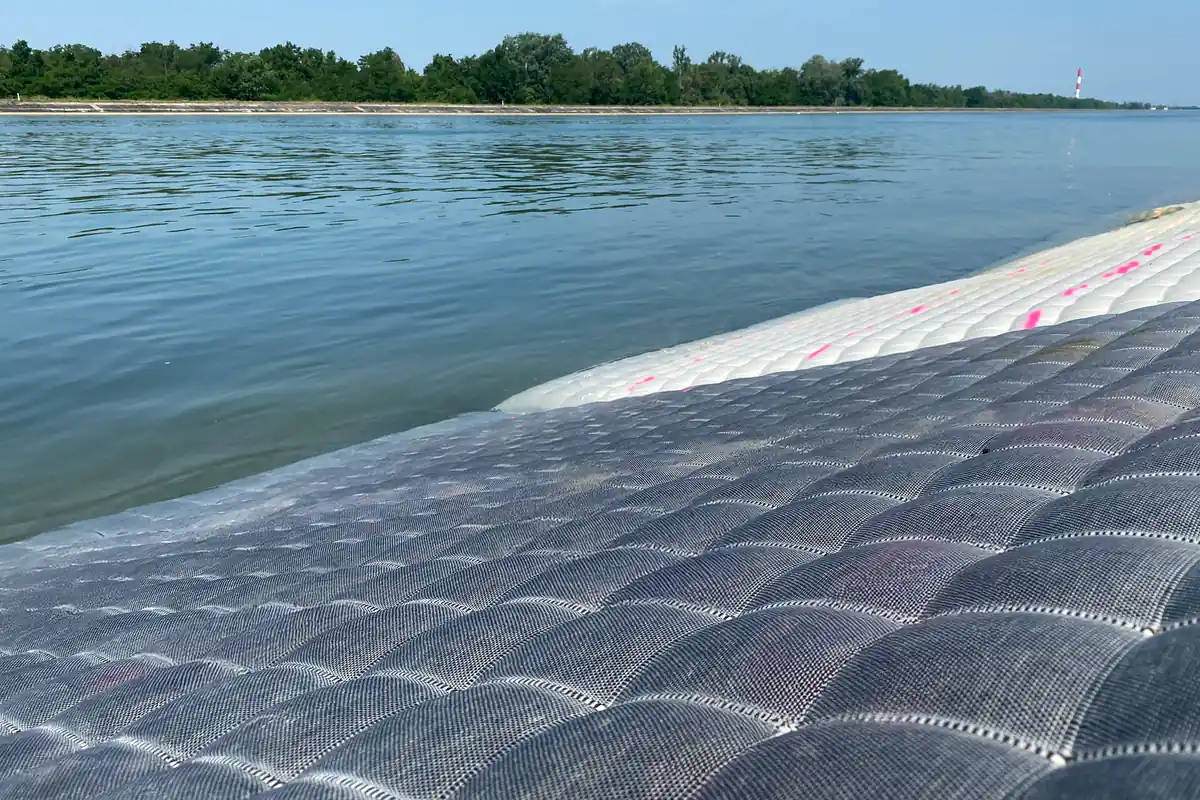
03 / Reservoirs & Lakes
Geofabriform protects upstream dam slopes, lake shorelines, drawdown zones and permanently submerged areas without draining the reservoir. The dense concrete mattress resists repeated wetting and drying, wave scour and freeze-thaw exposure while stabilizing the slope and reducing soil loss.
Selection Guide
Final design should account for flow velocity, wave loading, water-depth changes, slope geometry, foundation condition and anchoring demand.
Use 5–12 cm for ordinary irrigation channels and 15–25 cm for flood rivers or high-velocity channels.
Use 10–15 cm for ordinary tidal flats and 18–30 cm for wave-facing seawalls or storm-surge exposure, with reinforced anchoring.
Use 8–12 cm for ordinary lake or pond slopes and 12–20 cm for dam slopes, high-wave areas and drawdown zones.
Project Support
Send the application, drawings, water depth, flow velocity or wave conditions, slope geometry and required coverage for a practical recommendation.