Project Inquiry
Tell Us About Your Project
Share the product type, application, dimensions, quantity and delivery destination. Our team will respond with practical product and supply guidance.

Insights & Guides
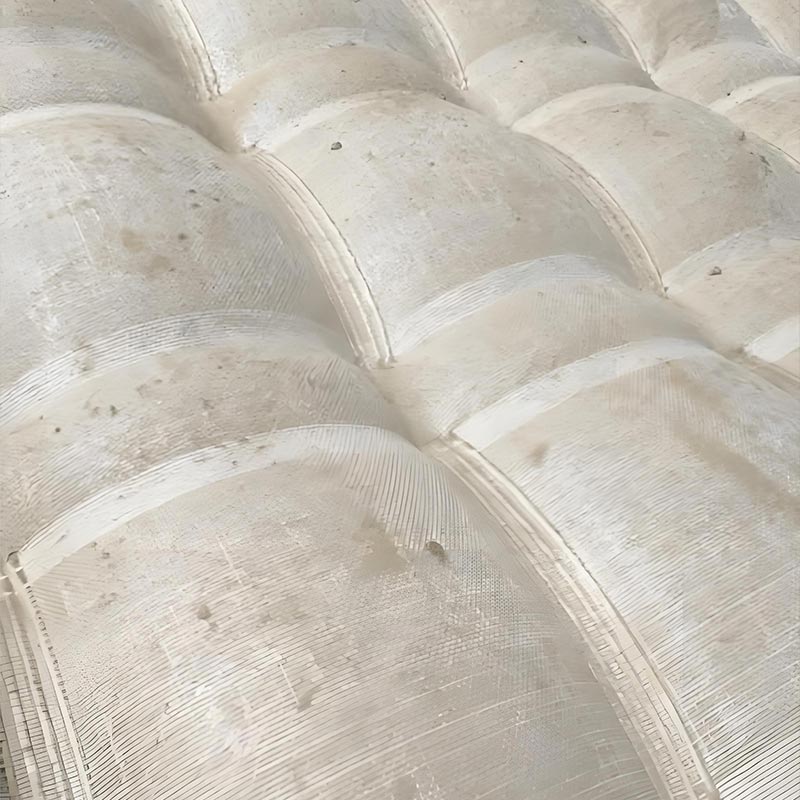
concrete fabric formwork decisions should start with a protection assembly matched to the erosion mechanism. This guide focuses on comparing fabric formwork with rigid forms and the information a buyer, site engineer or contractor needs before committing to a material or procedure. The practical question is whether the proposed arrangement fits the actual work, including hydraulics, foundation support, fabric connections and concrete placement. A familiar product name is a starting point for that review, rather than a substitute for the project drawings and acceptance requirements.
Consider a mattress installation with limited visibility during placement. The immediate discussion is about fabric formwork role, with concrete mix and pumping as a related check. For concrete fabric formwork, these decisions are connected: changing one part of the arrangement can change the evidence needed elsewhere. Resolve the interfaces before the filled mattress is accepted into service, while details can still be revised without disturbing completed work. The following sections explain what to compare, which records to request and where a superficially simple purchase can leave a practical gap.
Fabric formwork shapes and contains the placed concrete during formation of the mattress. The final system also depends on concrete properties, geometry, connections and support.
Keep the fabric description separate from the structural and hydraulic requirements. A strong fabric does not establish the completed mattress capacity by itself. Request the product construction details and review how they connect to the project placement procedure rather than comparing fabric tensile values alone.
A useful checkpoint is a fabric construction and complete-system specification. Check that it describes the actual proposed arrangement. If the package still depends on equating fabric strength with completed mattress performance, return that point for clarification before accepting the corresponding work.
Coordinate the concrete mix, pump arrangement and placement method with the fabric system and project specification. Workability, segregation and pumping interruptions can affect the formed result.
Use the approved trial or method statement to establish acceptable operation. Do not prescribe a universal mix or pump pressure for every mattress type. The site team needs a clear procedure for stopping, assessing and restarting when material or equipment conditions change.
For concrete fabric formwork, request a approved mix and pumping method. Use it to resolve the risk of using a generic fill mix without a placement review before the next activity begins. Keep the accepted basis available to the team carrying out this part of the work.
Prepare the supporting surface so the mattress can achieve the intended contact and geometry. Remove debris, resolve soft pockets and identify abrupt irregularities.
Underwater work may need a different inspection method from dry placement. Coordinate preparation with the designer and record the accepted condition. A concrete-filled fabric can follow some surface variation, but that characteristic should not be used to ignore unsuitable ground or unsupported areas that affect the designed assembly.
The concrete fabric formwork review should produce a foundation release and survey record. This makes the decision about foundation preparation traceable and helps prevent using mattress flexibility to excuse unresolved ground defects. Agree who prepares the evidence and who reviews it before work proceeds.
A protected bank face can remain vulnerable if the toe loses support. Establish the expected scour and the transition to the surrounding bed.
Show the apron or toe arrangement in the drawings and coordinate its installation sequence. Do not select a universal apron length from a product brochure. The relevant dimensions depend on the hydraulic and ground conditions, and they need review within the complete protection design.
A useful checkpoint for concrete fabric formwork is a toe and apron design detail. Check that it describes the actual proposed arrangement. If the package still depends on protecting the face while leaving the toe unsupported, return that point for clarification before accepting the corresponding work.
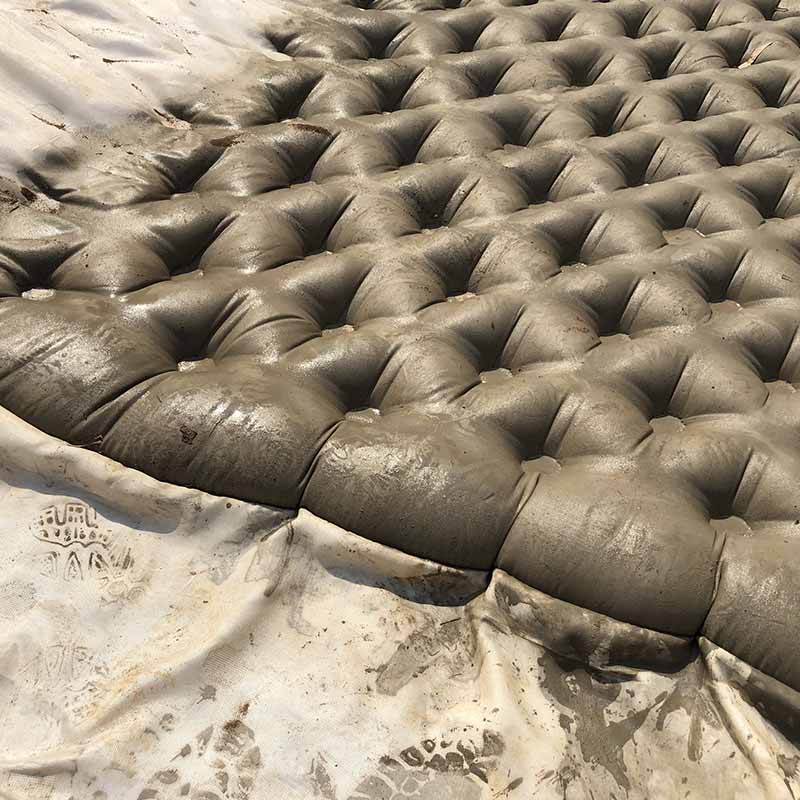
Underwater installation changes access, visibility and the ability to observe filling or contact. Plan survey, positioning and inspection methods before deployment.
Consider how currents, water levels and equipment access affect the approved procedure. A dry-land demonstration does not establish that an underwater installation can be controlled in the same way. The contractor should know which conditions require a pause and how the position of the mattress is confirmed before the next stage.
For concrete fabric formwork, request a underwater positioning and inspection method. Use it to resolve the risk of using a dry placement procedure without reviewing underwater control before the next activity begins. Keep the accepted basis available to the team carrying out this part of the work.
Where the design includes a filter under the mattress, match it to the soil and expected hydraulic conditions. The filter and concrete formwork have distinct roles even when both involve textiles.
Specify the relevant properties and joints for the underlayer. Inspect continuity before it becomes inaccessible. Omitting a filter review can leave a route for fine material to move despite a strong protective surface above it.
The concrete fabric formwork review should produce a soil-filter compatibility and underlayer detail. This makes the decision about filters beneath armor traceable and helps prevent assuming formwork fabric automatically fulfills the underlying filter role. Agree who prepares the evidence and who reviews it before work proceeds.
Canal protection must connect with bends, structures, outlets and existing lining without creating an unplanned weak edge. Coordinate the formed mattress geometry with the available channel section and construction access.
Keep the hydraulic capacity review separate from erosion resistance. A protective lining may address soil loss while still requiring checks on flow area, water levels and transitions. Detail the construction sequence where the canal must remain partly operational.
A useful checkpoint for concrete fabric formwork is a canal transition drawing and work sequence. Check that it describes the actual proposed arrangement. If the package still depends on assuming erosion protection also resolves channel capacity, return that point for clarification before accepting the corresponding work.
A riverbank or reservoir edge can experience changing water levels, exposed periods and shifting local flow. Review the range of conditions and the supporting bank stability.
Surface protection should fit the broader geotechnical and hydraulic assessment. Do not treat the visible eroded area as the only zone needing attention. Toe support, upper runoff and neighboring unprotected banks may influence how the protected area performs after construction.
For concrete fabric formwork, request a water-level range and bank-interface assessment. Use it to resolve the risk of limiting the review to the currently visible erosion scar before the next activity begins. Keep the accepted basis available to the team carrying out this part of the work.
Connections between panels need a defined detail that remains practical during deployment and filling. Identify the fabrication or field procedure and the required inspection.
A discontinuity between adjacent mattresses can create an exposure that the central panels do not have. Keep the connection materials and labor in the supply scope. If the layout changes on site, review the revised junction rather than assuming any stitched or overlapped edge is equivalent.
The concrete fabric formwork review should produce a panel connection method and inspection record. This makes the decision about panel seams and connections traceable and helps prevent accepting an unreviewed field junction after a layout change. Agree who prepares the evidence and who reviews it before work proceeds.
Compare concrete fabric formwork proposals on a common basis. The table below connects the principal decisions in this guide to the evidence that should support them. It is an assessment framework, not a claim that a particular product or installation has already passed these checks.
| Decision | Evidence to compare | Gap to resolve |
|---|---|---|
| Fabric formwork role | Fabric construction and complete-system specification | Equating fabric strength with completed mattress performance |
| Concrete mix and pumping | Approved mix and pumping method | Using a generic fill mix without a placement review |
| Foundation preparation | Foundation release and survey record | Using mattress flexibility to excuse unresolved ground defects |
| Toe and apron details | Toe and apron design detail | Protecting the face while leaving the toe unsupported |
Suppose two offers use the same concrete fabric formwork keyword but describe different arrangements. One includes a fabric construction and complete-system specification, while the other provides only a general description. Ask the second supplier to clarify the same requirement before treating the offers as equivalent. Then compare concrete mix and pumping and foundation preparation on the agreed basis. This hypothetical example illustrates the review sequence; it does not assign a passing result to either offer.
For the technical discussion, review the Geofabriform product page and the related product family. Use those pages to identify the material or equipment being discussed, then send the actual application, drawing and required evidence for confirmation. The concrete fabric formwork purchase description should preserve any project-specific conditions that remain subject to technical review.
For further reading, consult the Geosynthetic Institute specifications index. Use the relevant publication within its stated scope and check the applicable edition. The concrete fabric formwork submittal still needs evidence for the proposed product and project; an external reference is not a certificate or approval of this shipment.
Send Taiji your concrete fabric formwork application and the current drawings, along with the required quantity, delivery destination and planned construction or operating sequence. Include the questions raised by comparing fabric formwork with rigid forms, especially the fabric construction and complete-system specification and approved mix and pumping method. A clear brief helps the team discuss a suitable supply configuration and the documentation needed for your review.
Start with a protection assembly matched to the erosion mechanism. For the topic covered here, prioritize fabric formwork role and request a fabric construction and complete-system specification. The decision should fit the actual application rather than depend on the product name alone.
Request a approved mix and pumping method and a foundation release and survey record. Keep the proposed product or equipment identity visible so the records can be related to the delivered goods and intended method. Ask for clarification where those records describe different conditions.
Use common scope, property definitions and project assumptions. Compare toe and apron details alongside underwater placement, and resolve missing evidence before relying on a price difference. Similar wording in two quotations does not establish equivalent arrangements.
Avoid equating fabric strength with completed mattress performance. Also check for assuming formwork fabric automatically fulfills the underlying filter role. These issues concern how the product or procedure is used, so reviewing the installation or operating sequence is as important as checking the supplied description.
Send the application, relevant drawing, quantity or work area, location and intended schedule. Add the information needed for canal transitions and riverbank changes. State any required test evidence so the response can address the actual project scope.
Project Support
Tell us about the application, material requirements and delivery destination. We will respond with practical product guidance.