Enquête sur le projet
Parlez-nous de votre projet
Partagez le type de produit, l'application, les dimensions, la quantité et la destination de livraison Notre équipe répondra avec des conseils pratiques sur le produit et l'approvisionnement.
Insights & Guides
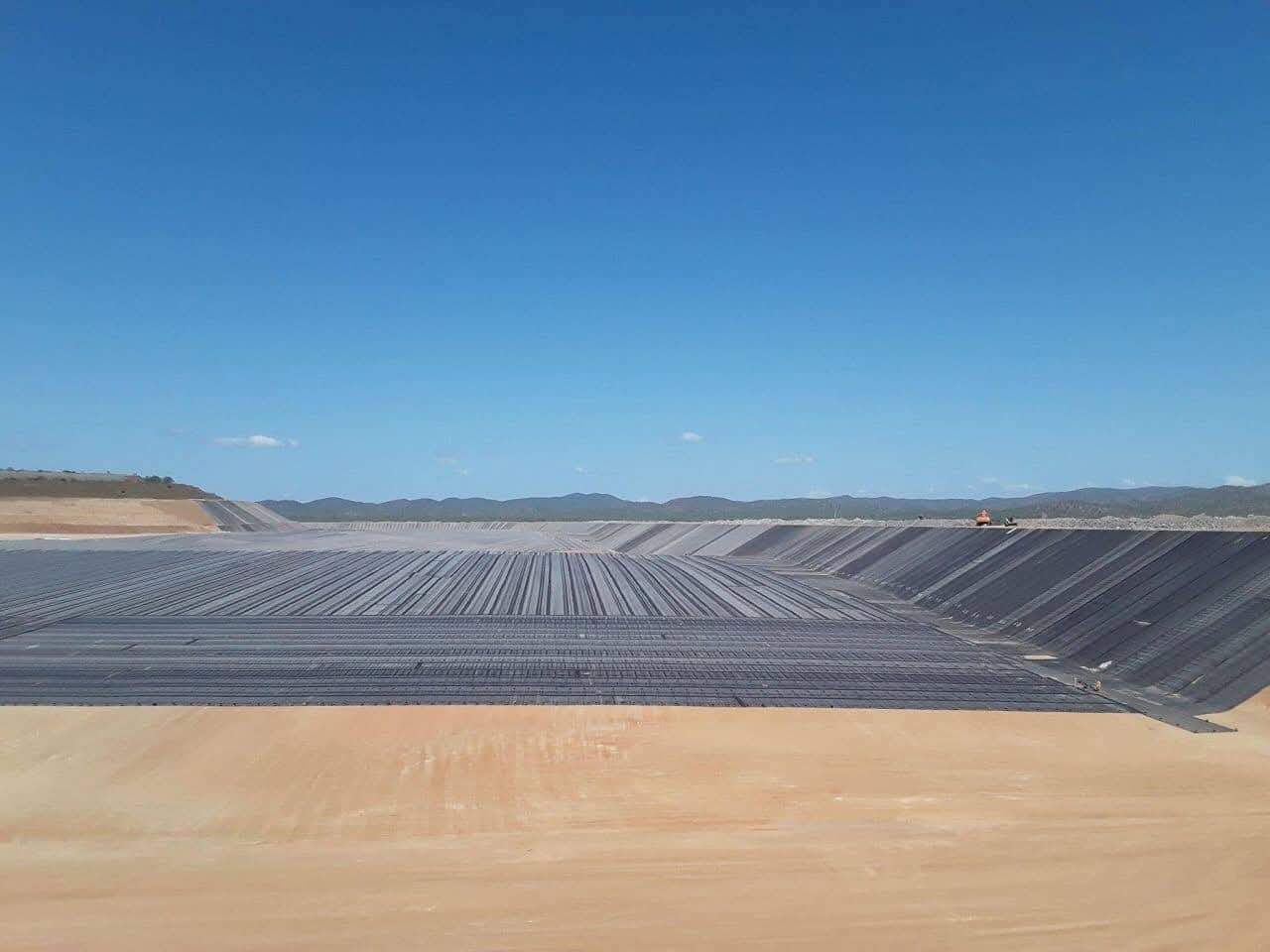
Geomembranes are continuous polymer sheets engineered to control the movement of liquids and gases. They form the primary barrier in many environmental, hydraulic, mining and industrial containment systems.
A geomembrane creates a low-permeability barrier between the contained material and the surrounding soil or groundwater. In a properly designed system, it can control seepage, contain process liquids, isolate waste and protect valuable water resources.
HDPE is widely specified for long-term containment because it combines very low permeability with strong chemical and ultraviolet resistance. LLDPE provides greater flexibility for uneven or settlement-prone foundations. PVC, FPP and EPDM can also be appropriate where flexibility, installation method or short-term economics are the primary design drivers.
Applications extend from landfill and hazardous-waste containment to irrigation ponds, wastewater lagoons, tailings facilities, heap-leach pads and biogas projects. The correct resin, thickness and surface type depend on the liquid being contained, the subgrade, exposure conditions and the required service life.
Material quality alone cannot guarantee a watertight system. The subgrade must be smooth and stable, panels must be laid out to limit stress, and polyethylene sheets should be joined with calibrated hot-wedge or extrusion welding equipment. Every seam should be documented and tested as part of a construction quality assurance program.
Covering or ballasting the liner protects it from ultraviolet exposure and mechanical damage. Correct chemical compatibility, careful welding, suitable protective geotextiles and routine inspection all help a geomembrane system perform reliably for decades.
A successful geomembrane project combines the right polymer and thickness with sound engineering, controlled installation and verified seams. Evaluating the full containment system—not only the sheet itself—is the best way to achieve dependable long-term performance.
Project Support
Tell us about the application, material requirements and delivery destination. We will respond with practical product guidance.