Consulta de proyecto
Cuéntenos sobre su proyecto
Comparta el tipo de producto, aplicación, dimensiones, cantidad y destino de entrega. Nuestro equipo responderá con orientación práctica sobre productos y suministros.

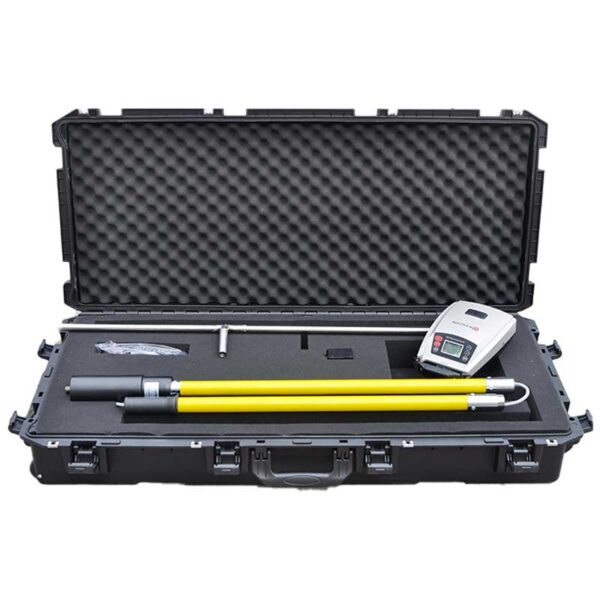
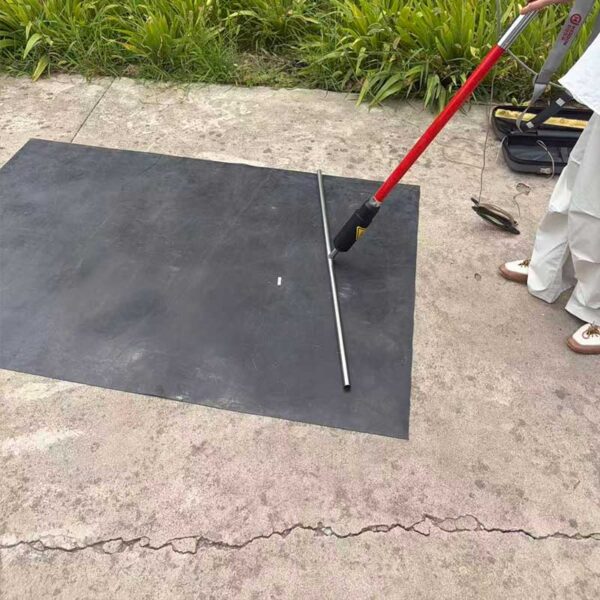
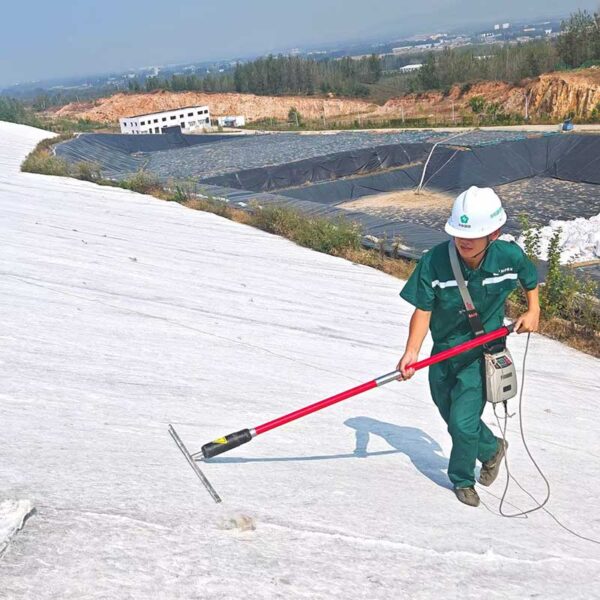
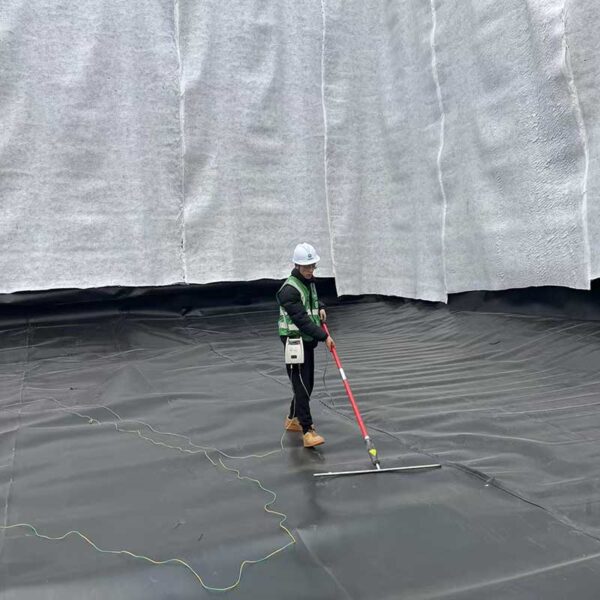
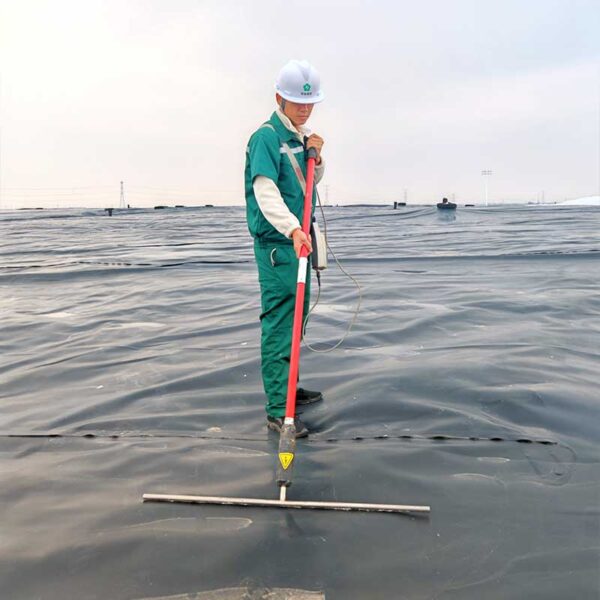
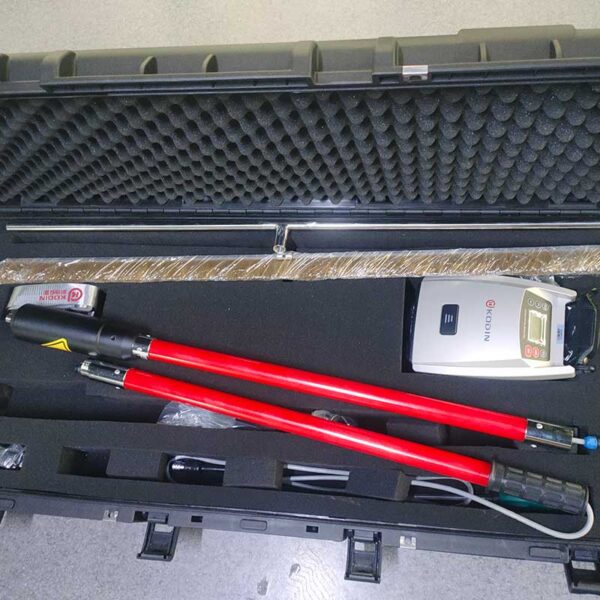
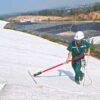
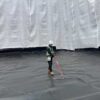

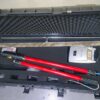
Instrumento portátil de prueba de chispas para localizar defectos en revestimientos de geomembranas eléctricamente aislantes durante la instalación y el mantenimiento.
The KODIN-7DJ Geomembrane Leak Detector is a portable high-voltage spark-test instrument for locating pinholes, punctures and other discontinuities in electrically insulating geomembrane liners. It is intended for installation acceptance, repair checks and routine maintenance on HDPE, LDPE, PVC, polypropylene and asphalt geomembranes.
| Item | Specification |
|---|---|
| Model | KODIN-7DJ |
| Compatible liners | Electrically insulating HDPE, LDPE, PVC, polypropylene and asphalt geomembranes |
| Theoretical thickness range | 0.1–35 mm; effective range depends on field conditions |
| Grounding | Ground rod and cable connected to a conductive sub-base |
| Alarm | Audio-visual indication with automatic event counting |
| Counter capacity | Up to 999 events |
| Battery | 12.6 V, 4400 mAh lithium battery |
Electrically insulating HDPE, LDPE, PVC, polypropylene and asphalt geomembranes are supported. Conductive liners are not compatible with the spark-test principle.
No. A ground rod is placed into the conductive sub-base and connected to the instrument before testing.
Standing water, a wet surface, exposed conductive substrate, metal debris or an excessively high voltage setting can trigger false indications.
Yes. Effective detection depends on liner thickness, substrate conductivity and the chosen output voltage, so a known test defect should be checked first.
Share the liner material, thickness, substrate condition and inspection area for equipment and setup guidance.