Filament Nonwoven Geotextile

High-strength continuous-filament PET or PP nonwoven geotextile for separation, filtration, drainage, reinforcement and geomembrane protection in civil and environmental projects.

Product overview

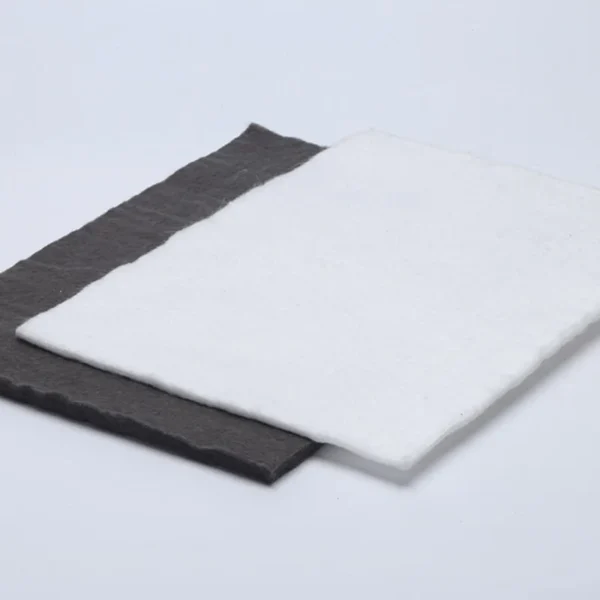
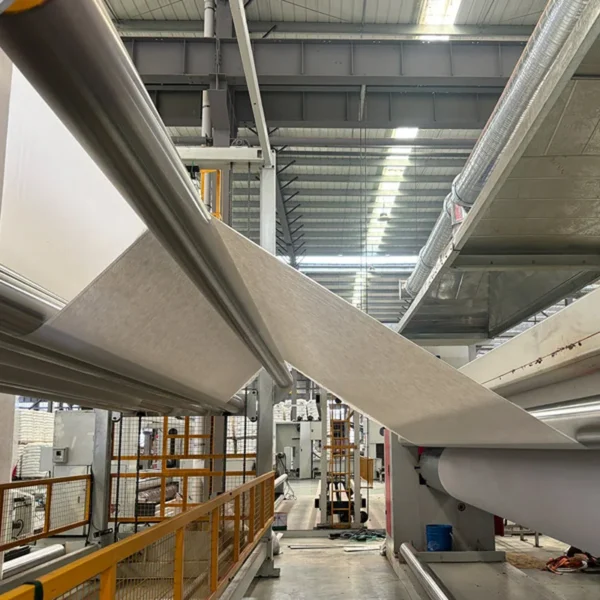
Filament nonwoven geotextile is manufactured from continuous polyester (PET) or polypropylene (PP) filaments through melt spinning, web formation and needle punching or thermal bonding. Its randomly interlaced three-dimensional fiber network provides uniform interconnected pores, stable filtration and strong mechanical performance for demanding geotechnical works.

Key features

  • High tensile, tear, puncture and creep resistance for load distribution and soil restraint
  • Reliable separation between soil layers and granular fill while improving overall stability
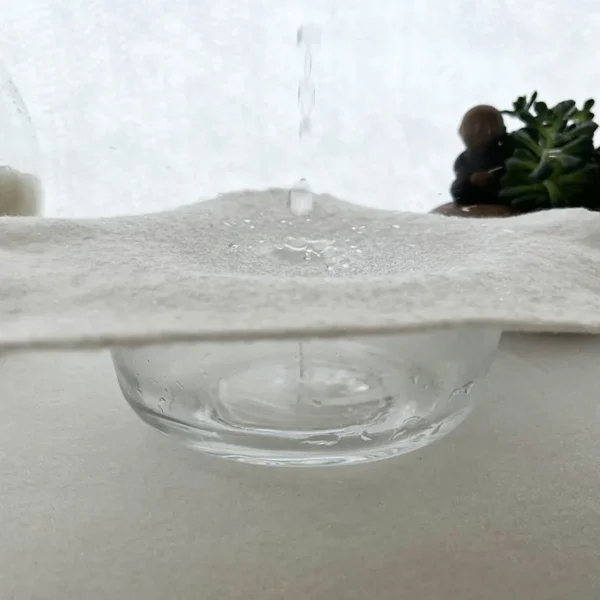
  • Balanced permeability and soil retention for filtration and drainage
  • Protective cushioning that reduces puncture risk to geomembranes and barrier systems
  • Resistance to acids, alkalis, microorganisms and ageing in varied site environments
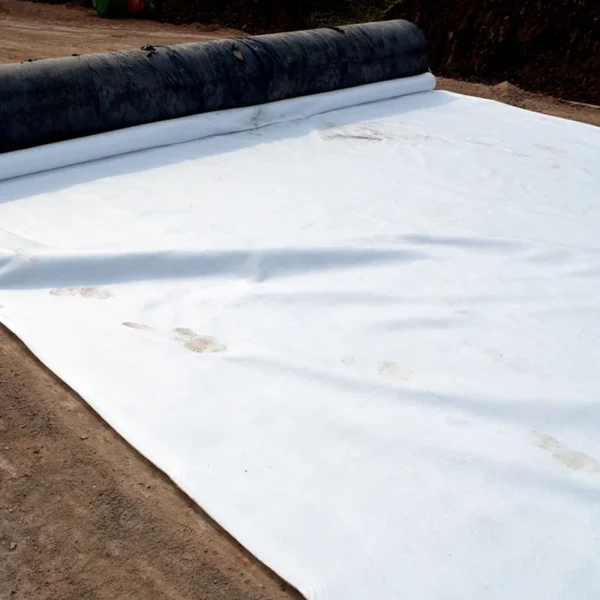
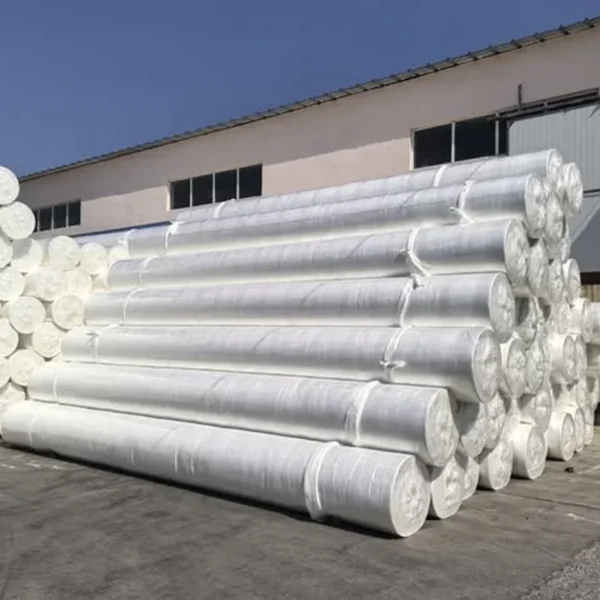
  • Flexible rolls that are straightforward to transport, cut, overlap and install

Приложения

  • Highway, railway and urban-rail subgrades
  • Soft-ground improvement and reinforced embankments
  • Dams, reservoirs, canals and riverbank protection
  • Landfill and wastewater barrier-system protection
  • Ports, breakwaters, revetments and land reclamation
  • Tailings facilities, mine reclamation and ecological slopes

Specification and supply

Select the mass grade by filtration, protection, reinforcement and site-loading requirements. Lighter grades suit general separation and filtration; heavier grades provide greater puncture resistance and cushioning over geomembranes. Final values should be confirmed against the project specification and test certificate.

Available options

  • Mass per unit area: 100–1000 g/m²
  • Material: PET or PP
  • Roll width: project-specific options available
  • Roll length: project-specific options available
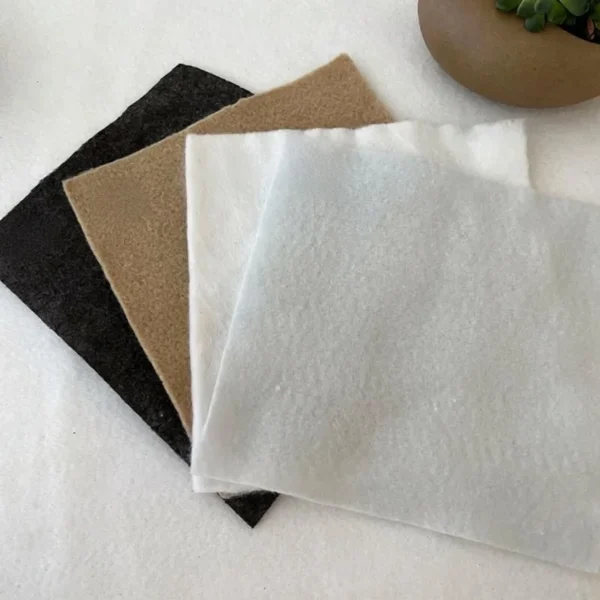
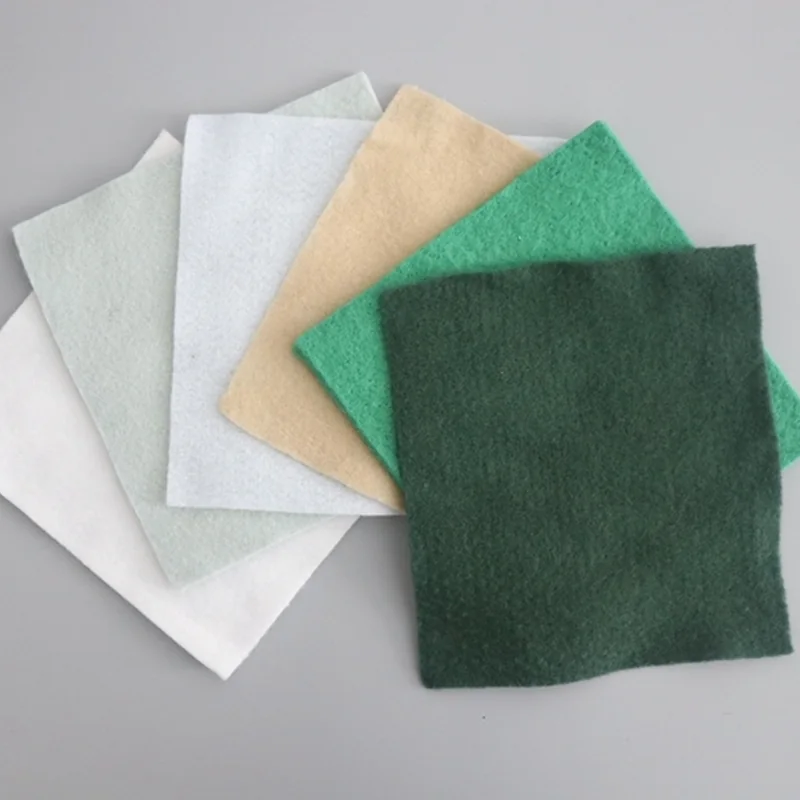
  • Color and packaging: available to order

Frequently asked questions

What is a filament nonwoven geotextile?

It is a permeable geosynthetic made from continuous PET or PP filaments bonded by spunbonding, needle punching or thermal calendering.

How does filament geotextile differ from staple-fiber geotextile?

Continuous filaments generally provide higher tensile, tear and puncture resistance with strong long-term stability. Staple-fiber geotextile is bulkier and economical for general separation, filtration and protection.

What raw materials are available?

Polyester (PET) is the common option, while polypropylene (PP) can also be supplied. UV stabilizers and antioxidants can be included according to the intended service environment.

What specifications are commonly supplied?

Typical mass grades range from 100 to 1000 g/m². Roll width, roll length and packaging can be configured to match transport and installation requirements.

What functions does the product provide?

It provides separation, filtration, drainage, reinforcement, protection and puncture resistance while preventing the intermixing of adjacent soil layers.

Where is filament nonwoven geotextile used?

Typical projects include road and railway subgrades, airfields, landfills, tailings facilities, reservoirs, river slopes, tunnels and underground structures.

Technical specifications

Mass per unit area

Unit: g/m² • 100: 100 • 150: 150 • 200: 200 • 300: 300 • 400: 400 • 500: 500 • 600: 600 • 800: 800 • 1000: 1000 • Test method: GB/T 13762 · ISO 9864 · ASTM D5261

Mass tolerance

Unit: % • 100: ±5 • 150: ±5 • 200: ±5 • 300: ±5 • 400: ±5 • 500: ±5 • 600: ±5 • 800: ±5 • 1000: ±5 • Test method: GB/T 17639

Tensile strength MD/CD ≥

Unit: kN/m • 100: 4.5 • 150: 7.5 • 200: 10 • 300: 15 • 400: 20 • 500: 25 • 600: 30 • 800: 40 • 1000: 50 • Test method: GB/T 15788 · ISO 10319 · ASTM D4595

Elongation at break

Unit: % • 100: 40–80 • 150: 40–80 • 200: 40–80 • 300: 40–80 • 400: 40–80 • 500: 40–80 • 600: 40–80 • 800: 40–80 • 1000: 40–80 • Test method: GB/T 15788 · ISO 10319

CBR puncture strength ≥

Unit: kN • 100: 0.8 • 150: 1.4 • 200: 1.8 • 300: 2.8 • 400: 3.6 • 500: 4.2 • 600: 5.2 • 800: 6.5 • 1000: 8.0 • Test method: GB/T 14800 · EN ISO 12236 · ASTM D6241

Trapezoid tear strength ≥

Unit: kN • 100: 0.14 • 150: 0.21 • 200: 0.28 • 300: 0.42 • 400: 0.56 • 500: 0.70 • 600: 0.82 • 800: 1.10 • 1000: 1.25 • Test method: GB/T 13763 · ASTM D4533

Thickness at 2 kPa ≥

Unit: mm • 100: 0.8 • 150: 1.2 • 200: 1.6 • 300: 2.2 • 400: 2.8 • 500: 3.4 • 600: 4.2 • 800: 5.5 • 1000: 6.8 • Test method: GB/T 13761.1 · ISO 9863-1

Characteristic opening size O₉₀

Unit: mm • 100: 0.07–0.20 • 150: 0.07–0.20 • 200: 0.07–0.20 • 300: 0.07–0.20 • 400: 0.07–0.20 • 500: 0.07–0.20 • 600: 0.07–0.20 • 800: 0.07–0.20 • 1000: 0.07–0.20 • Test method: GB/T 14799 · EN ISO 12956

Permeability normal to plane

Unit: cm/s • 100: K × 10⁻¹ to 10⁻³ • 150: K × 10⁻¹ to 10⁻³ • 200: K × 10⁻¹ to 10⁻³ • 300: K × 10⁻¹ to 10⁻³ • 400: K × 10⁻¹ to 10⁻³ • 500: K × 10⁻¹ to 10⁻³ • 600: K × 10⁻¹ to 10⁻³ • 800: K × 10⁻¹ to 10⁻³ • 1000: K × 10⁻¹ to 10⁻³ • Test method: GB/T 15789 · EN ISO 11058

Width tolerance

Unit: % • 100: −0.5 • 150: −0.5 • 200: −0.5 • 300: −0.5 • 400: −0.5 • 500: −0.5 • 600: −0.5 • 800: −0.5 • 1000: −0.5 • Test method: GB/T 17639

UV resistance (500 h) retention ≥

Unit: % • 100: 85 • 150: 85 • 200: 85 • 300: 85 • 400: 85 • 500: 85 • 600: 85 • 800: 85 • 1000: 85 • Test method: GB/T 17631 · EN 12224 · ASTM D4355